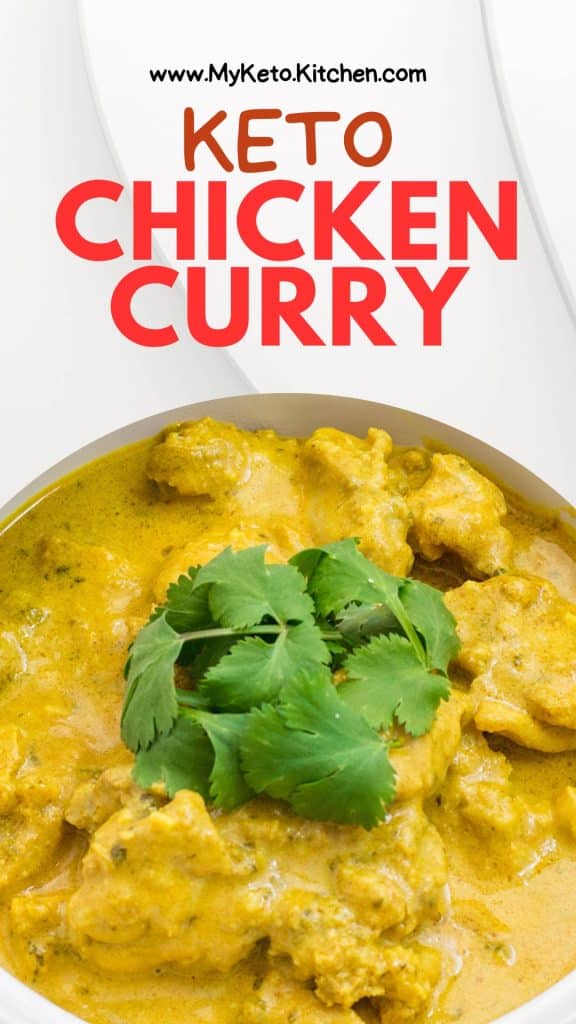
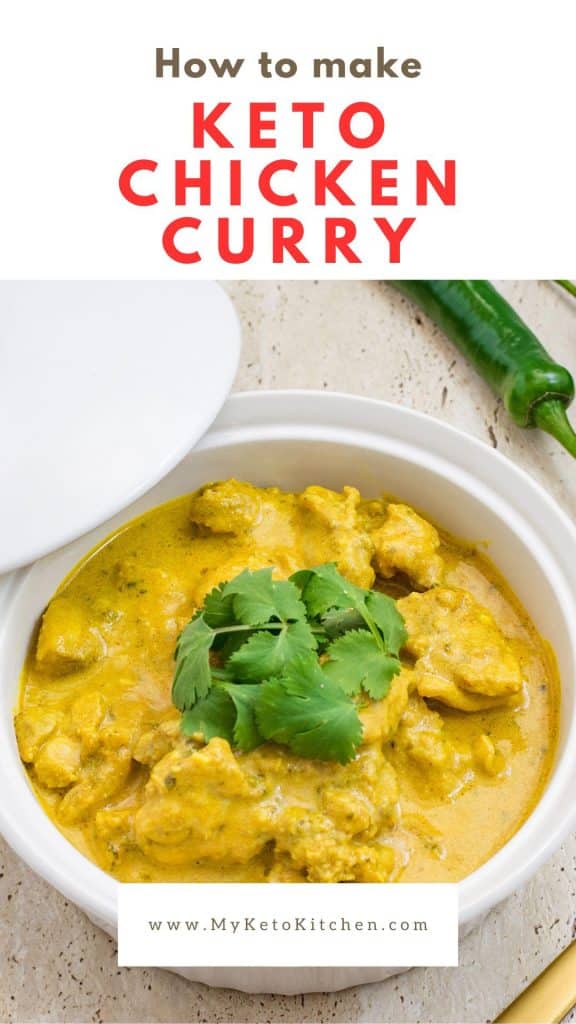


This keto chicken curry is a deeply aromatic, creamy Indian curry with just 3g net carbs per serving — made with chicken thighs, ghee, and fresh spices blended into a rich sauce that tastes like it came from your favourite restaurant. Rated 5 stars by 219 readers, it’s one of the most loved recipes on My Keto Kitchen.
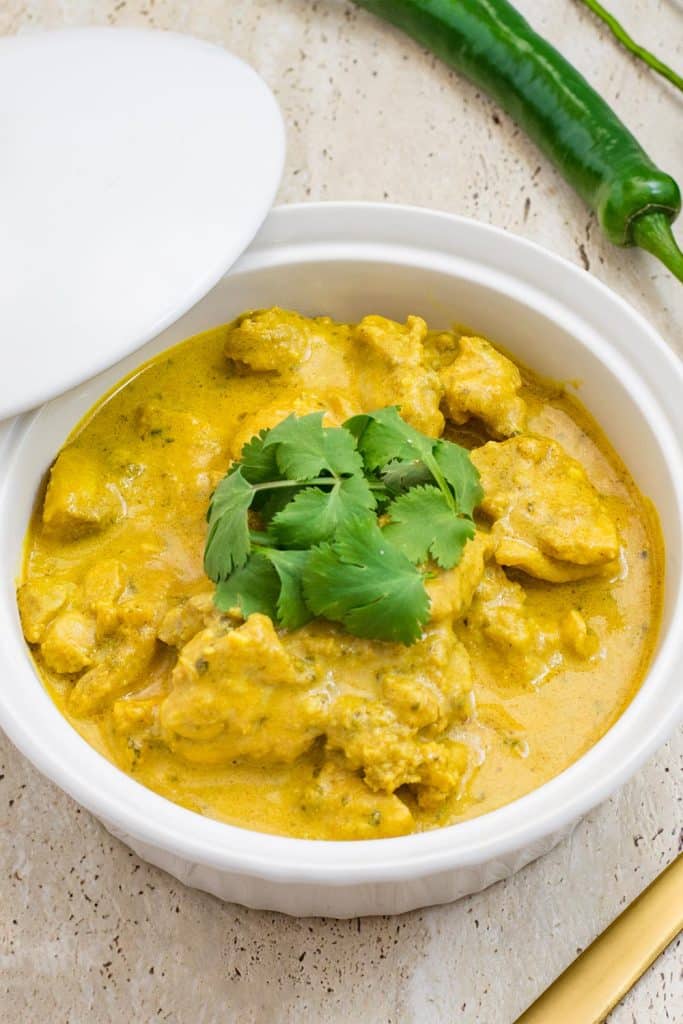
The technique is the key. Blending the onion, chili, ginger, garlic, and cilantro into a paste first means every mouthful is infused with flavour, not just coated in it. The spices are then gently bloomed in ghee before the chicken goes in — 40 minutes from start to finish.
As a nutritionist and founder of My Keto Kitchen, this is one of the recipes I come back to again and again. It doubles beautifully for meal prep, keeps all week in the fridge, and gets better the next day as the spices deepen into the chicken.
At a glance
- ✓Only 3g net carbs per serving
- ✓Ready in 40 minutes
- ✓Rated 5 stars by 219 readers
- ✓Great for meal prep — keeps 1 week
If you love this chicken recipe, you’ll love my keto butter chicken. For something quick and easy, try my juicy keto grilled chicken thighs.
Is Curry Keto-Friendly?
Traditional curry from an Indian restaurant usually isn’t keto. The sauce is often thickened with cashews or flour, served over high-carb rice, and may contain added sugar in the base. A restaurant portion can easily run 30–50g net carbs before you count the sides.
This version is built from the ground up to be keto-compliant. The thickening comes from reducing cream and from the blended aromatic paste — no starches, no added sugar. The result is 3g net carbs per 150g serving, with the carbs coming almost entirely from onion, tomato paste, and the spice mix. It fits comfortably within a 20–25g daily net carb limit.
Ingredients and Why They Matter
Ghee vs. butter: Ghee is clarified butter with the milk solids removed. It has a higher smoke point than butter (485°F / 250°C vs. 350°F / 175°C), which means you can cook the aromatic paste without burning the fat. It also has a nutty, concentrated flavor that complements the spices. Coconut oil is a viable dairy-free substitute.
Chicken thighs vs. breasts: Thighs have more intramuscular fat, which keeps them moist through a 20–25 minute simmer. Breasts can dry out quickly at that temperature — if you use them, reduce simmering time to 10–12 minutes and watch closely.
Heavy cream: Adds richness and thickens as it reduces. Replacing half with full-fat coconut milk adds subtle sweetness and a slightly more complex flavor without significantly changing the carb count. Full coconut milk replacement makes the dish dairy-free and shifts the flavor profile toward a mild Thai style.
Tomato paste: Adds umami and some acidity to balance the cream. Two tablespoons contribute minimal carbs but meaningful depth — don’t skip it.
Fresh vs. dried spices: The recipe uses ground dried spices for the main flavor layer and fresh aromatics for the base. Using fresh ginger, garlic, and chili rather than dried gives a noticeably brighter result.
How to Make Keto Chicken Curry — Key Technique Notes
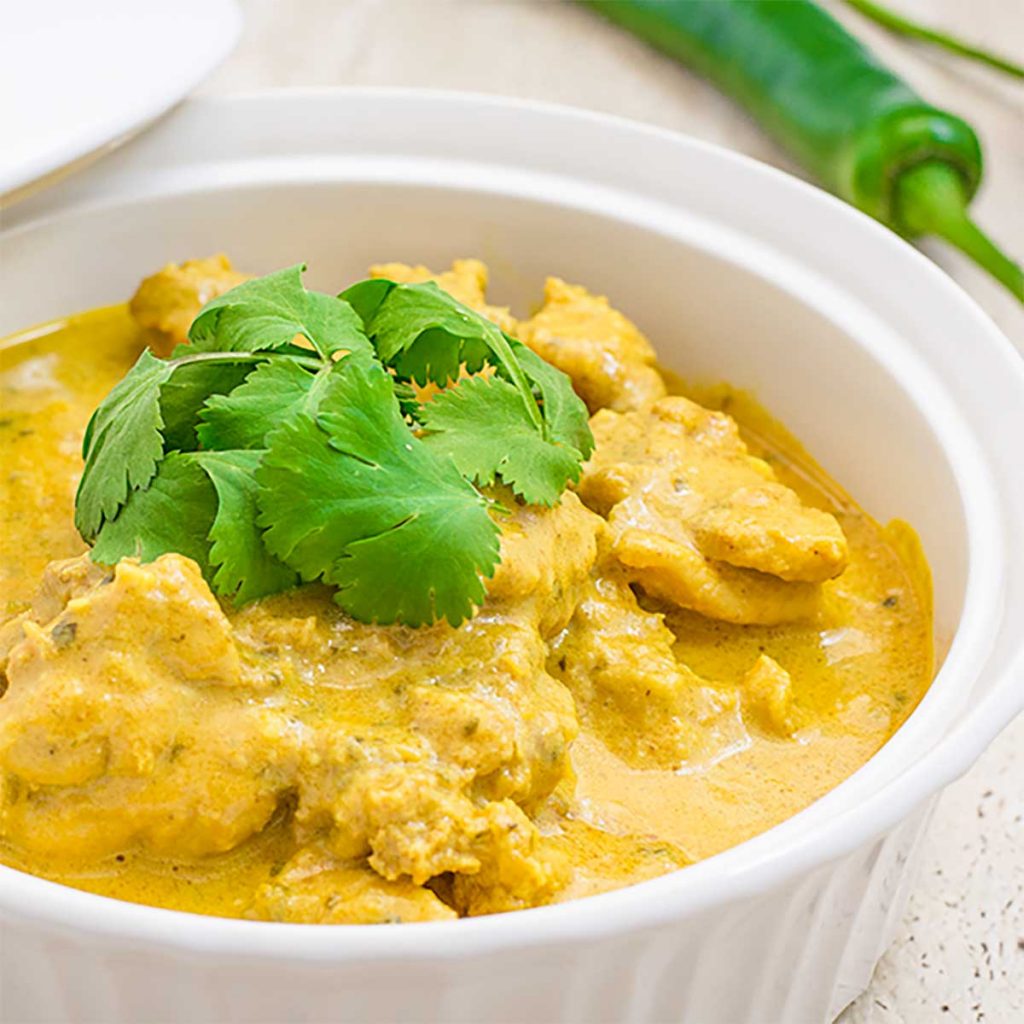
The step-by-step is in the recipe card. These are the technique points that actually matter:
Blend, don’t chop. The onion, chili, ginger, garlic, and cilantro need to become a smooth paste in the food processor. Chopping and frying them whole gives a different — and inferior — result. If your processor struggles, add a tablespoon of water.
Sauté the paste low and slow for 10 full minutes. This is not optional. You’re caramelizing the aromatics and removing raw onion sharpness. Rushing this step is the most common reason a curry tastes sharp instead of mellow.
Bloom the spices in fat before adding liquid. After the turmeric, cumin, and coriander go in, keep the heat low and cook for 5 minutes before any liquid touches the pan. Dry-roasting spices in hot fat unlocks volatile compounds that water-based cooking cannot. You’ll smell the difference.
Simmer uncovered to thicken. The 20–25 minute simmer with cream is what tightens the sauce. Keep it at a low simmer — boiling cream can cause it to separate.
Cook Time Comparison Table
| Method | Total Time | Notes |
|---|---|---|
| Stovetop (this recipe) | 40 minutes | Best flavor development; most control over sauce thickness |
| Slow cooker | 4–6 hours low / 2–3 hours high | Add cream in the last 30 minutes only; sauce will be thinner |
| Instant Pot | 25 minutes (plus preheat) | Sauté paste and bloom spices first using the sauté function; pressure cook 8 minutes, stir in cream after releasing pressure |
| Meal prep (double batch) | 50 minutes | Scales directly; use a wide pan or Dutch oven so the paste doesn’t steam instead of sauté |
Serving Suggestions
- Cauliflower Rice: Cauliflower rice is a classic low-carb option that perfectly soaks up the flavorful sauce.
- Keto Bread: Enjoy the curry with fluffy, keto-friendly bread.
- Broccoli Mash: A creamy and comforting alternative to traditional mashed potatoes.
- Zucchini Noodles: A light and refreshing option, serve with zucchini noodles for a summery twist.
- Roasted Vegetables: Add various colorful vegetables for extra nutrients and texture.
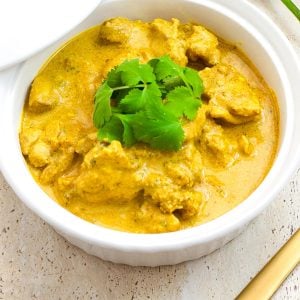
Keto Chicken Curry Recipe
Rate it
Print Pin Share EmailUnit Conversion
Ingredients
- 1 small Onion roughly chopped
- 1 large Green Chili roughly chopped
- 1 inch Ginger roughly chopped
- 3 cloves Garlic
- 1/2 cup Cilantro leaves and stems
- 3 tablespoons Ghee
- 2 teaspoons Turmeric ground
- 1 1/2 teaspoons Cumin ground
- 1 teaspoon Coriander ground
- 2 tablespoons Tomato Paste
- 2 pounds Chicken Thighs
- 1 cup Heavy Cream
- 1 teaspoon Salt
Instructions
- In your food processor, add the onion, green chili, ginger, garlic, and fresh coriander. Blend until all ingredients are finely chopped. If your food processor is struggling, add a tablespoon of water to help the ingredients move around.1 small Onion, 1 large Green Chili, 1 inch Ginger, 3 cloves Garlic, 1/2 cup Cilantro
- Scrape the mixture out of the food processor and into a large saucepan over low heat, add the ghee and gently saute for 10 minutes.3 tablespoons Ghee
- Add the turmeric, cumin and ground coriander and continue to gently saute for another 5 minutes.2 teaspoons Turmeric, 1 1/2 teaspoons Cumin, 1 teaspoon Coriander
- Add the tomato paste and stir well to combine with the other ingredients, continue to cook for another 2 minutes before adding the diced chicken.2 tablespoons Tomato Paste, 2 pounds Chicken Thighs
- Increase the heat to medium and cook the chicken in the spices for 10 minutes.
- Add the cream and salt, and reduce the heat until the curry is simmering. Simmer for 20-25 minutes until the chicken is cooked through and the sauce has thickened.1 cup Heavy Cream, 1 teaspoon Salt
- Serve the Chicken Curry immediately with a side of Cauliflower Rice.
Notes
Nutrition

Pro Tips
Blend the aromatics into a paste.
Don’t skip the food processor step. Blending the onion, chili, ginger, garlic, and cilantro into a smooth paste is what makes this curry taste authentically Indian rather than just spiced. If your processor struggles, add a tablespoon of water to keep it moving.
Sauté low and slow.
Cook the paste in ghee over low heat for a full 10 minutes. This slowly caramelises the aromatics and removes the raw onion flavour — rushing it is the most common reason a curry tastes sharp rather than mellow.
Bloom the spices before adding liquid.
After adding the turmeric, cumin, and coriander, keep the heat low and cook for 5 minutes before adding any liquid. Blooming the spices in fat unlocks their full flavour and aroma.
Use chicken thighs, not breasts.
Thighs stay juicy and tender through the 20–25 minute simmer. If you only have breasts, reduce the simmering time to 10–12 minutes and watch closely.
Make it mild or hot — your call.
For a mild curry, omit the green chili and use half a teaspoon of Kashmiri chili powder instead for colour without heat, as reader Hilary recommends. For more heat, add a second chili or a pinch of cayenne.
Try half cream, half coconut milk.
As reader Alex discovered — replacing half the heavy cream with full-fat coconut milk gives a slightly more complex depth. It also makes the recipe dairy-free if you replace the ghee with coconut oil.
It tastes better the next day.
The spices continue to meld overnight in the fridge. Reader Jenny makes a double batch every week for exactly this reason.
Frequently Asked Questions
It depends on how it’s made. Traditional restaurant curry often is not — the sauce may be thickened with cashews or flour, and it’s typically served over white rice, which can add 40g or more of net carbs. A homemade keto curry built with cream or coconut milk and no starch thickeners can easily come in under 5g net carbs per serving.
This keto chicken curry has 3g net carbs per serving (150g). Total carbohydrates are 4g with 1g fibre, giving 3g net carbs. The carbs come primarily from the onion, tomato paste, and small amount of spices.
Yes, but we recommend thighs for their superior flavour and moisture. If using chicken breast, reduce the simmering time to 10–12 minutes to prevent the meat from drying out. Reader Sylvia used breasts with reduced cooking time and called it restaurant quality.
Ghee is strongly recommended for authentic flavour — it has a higher smoke point than butter and a nuttier taste that complements the spices. If you don’t have ghee, clarified butter is the closest substitute. Coconut oil also works well and keeps the recipe dairy-free. Regular butter can be used in a pinch but may separate at higher temperatures.
No — the cream won’t separate when cooled and reheated. The instruction to serve immediately simply means to eat it hot. Store in an airtight container in the fridge for up to 1 week, or freeze for up to 3 months. Reheat gently on the stovetop or in the microwave.
Yes. Replace the heavy cream with full-fat coconut milk for a creamy version. Replace the ghee with coconut oil. The result will taste slightly more like a Thai-inspired curry but is still delicious — reader Alex uses half cream and half coconut milk for a middle-ground version.
Yes — cilantro and fresh coriander are the same thing. In North America the leaves are typically called cilantro; in the UK and Australia they’re called fresh coriander. The ground coriander in the recipe is made from the dried seeds and is a different product.
The best keto accompaniments are cauliflower rice, which soaks up the sauce beautifully, or zucchini noodles for a lighter option. Keto bread works well for scooping. Reader Tom found it equally good without any base at all.
Yes — reader Melanie used a rotisserie chicken with great results. Skip the browning step and add the shredded chicken after the cream, reducing the simmer to 10 minutes just to heat it through.
For mild: omit the green chili and use half a teaspoon of Kashmiri chili powder. For medium: use the recipe as written. For hot: add a second green chili or a pinch of cayenne. Reader Aaron adds garam masala, Kashmiri chili, and dried fenugreek at the end for an elevated result.
Absolutely. Spinach is a popular addition — stir a large handful in during the last 2 minutes until just wilted. Red pepper, canned tomatoes, and mushrooms have all been used by readers with great results. Avoid potato, peas, or chickpeas to keep it keto.
Two likely causes. First, the aromatic paste wasn’t cooked long enough — it needs a full 10 minutes over low heat to caramelize and mellow. Second, the spices weren’t bloomed in fat before adding liquid. Both steps unlock flavor compounds that don’t develop in water-based cooking. If the curry is bitter, low heat and more time are usually the fix.
Reader tips
“After trying many chicken curry recipes to replicate an authentic Indian restaurant taste, I finally found this. And it’s keto! This is a new favourite.”
★★★★★ Mark K.
“The third time I’ve made this, I added garam masala, Kashmiri chili pepper, and finished with dried fenugreek. Amazing.”
★★★★★ Aaron
“We used a rotisserie chicken and canned green chilies — AMAZING! So easy. This is going into our meal prep rotation.”
★★★★★ Melanie
More keto curry recipes:
- Pork Vindaloo
- Lamb Madras
- Vegetarian Boiled Egg Curry
- Coconut Pork Curry
- Lamb Korma
- One Pan Chicken Thighs
To make this recipe in a larger batch, adjust the serving amounts in the recipe card above.