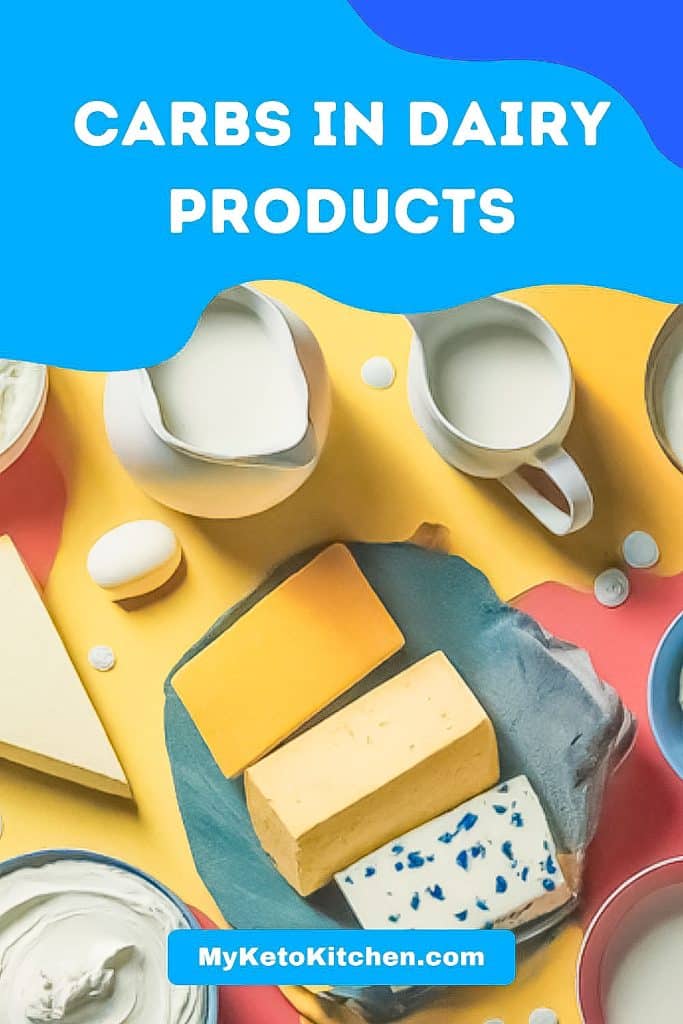
Dairy on keto is not all or nothing. The carbs in dairy products vary so dramatically — from zero in ghee to 13 grams per cup in skim milk — that the same dairy aisle contains both your best keto staples and the fastest way to blow your daily carb budget without realizing it. The difference comes down to one thing: how much lactose, the naturally occurring sugar in milk, survives the production process. Butter and aged hard cheese have almost none left. Regular milk has all of it.
I’ve been cooking keto for over a decade, and dairy is still the most consistent source of accidental carb overages I see — not from obvious offenders like ice cream, but from people treating Greek yogurt as a free food, adding heavy cream to four coffees without measuring, or not realizing that low-fat dairy has essentially the same carbs as full-fat. In my van, the fridge is small and I keep it tight: grass-fed butter, aged cheddar, heavy cream, and full-fat Greek yogurt when I have the space. Four products, every carb accounted for, and they cover almost everything I need on the road.
This guide covers net carb counts for every major dairy category — milk (including lactose-free, ultra-filtered, and plant-based alternatives), cheese, cream, butter, yogurt, and kefir — along with the full-fat vs. low-fat myth, the dairy tolerance and weight-stall question, how much dairy to use per day, and whether you need dairy on keto at all. Each section is written to answer a specific question completely.
At a glance
How Dairy Carbs Work: The Lactose Factor
Carbohydrates in dairy come almost entirely from lactose — a naturally occurring sugar made up of two simpler sugars, glucose and galactose. When you eat dairy, the enzyme lactase breaks lactose down so both components enter your bloodstream and raise blood sugar, exactly as any other carbohydrate would. The amount of lactose in a given dairy product depends almost entirely on how much processing occurred between the cow and your kitchen.
This is why dairy carbs vary so wildly between products. Fermentation, aging, and fat separation all strip out lactose progressively:
- Raw milk retains all its natural lactose — 12g net carbs per cup
- Yogurt and kefir have some lactose converted to lactic acid during fermentation — roughly 8–10g per cup
- Hard aged cheese has bacteria working for months consuming almost all residual lactose — under 1g per ounce
- Butter is separated fat — almost no lactose survives — under 0.1g per tablespoon
- Ghee has the last milk solids removed — zero carbs
One critical point for keto tracking: dairy products contain no dietary fiber. That means net carbs and total carbs are the same number — there is nothing to subtract. Whatever the Total Carbohydrate line says on the label is your net carb figure.
The Full-Fat vs. Low-Fat Carb Myth
This is the most widely misunderstood thing about dairy nutrition, and it costs people real carbs every day. Removing fat from dairy does not reduce the carbohydrates. Fat and lactose are separate components of milk — they exist independently. When manufacturers skim out the fat, the lactose stays. The relative proportion of lactose per cup may even increase slightly, because fat has been replaced with more of the watery lactose-carrying fraction.
In practice: whole milk and skim milk both contain 12–13 grams of carbs per cup. Full-fat Greek yogurt and fat-free Greek yogurt are within 0.2–0.3 grams of each other per serving. The carb saving from choosing low-fat dairy is negligible to zero, while the fat you lose was doing useful work keeping you satiated and hitting your keto fat macros.
Full-fat is the correct choice across the board — not because it’s meaningfully lower in carbs, but because it fits the keto macro ratio better, keeps hunger suppressed longer, and in the case of cream and cheese, tastes significantly better. Low-fat and fat-free dairy products sometimes have milk solids or thickeners added to compensate for the texture loss, which can push carbs slightly higher than the full-fat equivalent.
How Many Carbs in Milk?
Regular cow’s milk — whole, 2%, 1%, or skim — is not suitable for a strict keto diet. A single cup of any variety carries 12–13 grams of net carbs, which is more than half the daily carb limit for most people in ketosis. The fat percentage makes almost no difference to the carb count. As you reduce the fat, you do not reduce the carbs — you simply remove the fat and concentrate the lactose fraction further.
| Milk Type | Net Carbs (per cup) | Fat | Protein | Keto? |
|---|---|---|---|---|
| Whole milk | 12g | 8g | 8g | No |
| 2% reduced-fat milk | 12g | 5g | 8g | No |
| 1% milk | 13g | 2.5g | 8g | No |
| Skim milk | 13g | 0g | 8g | No |
| Buttermilk | 12g | 2g | 8g | No |
| Goat’s milk | 11g | 10g | 9g | No |
| Lactose-free milk | 12g | 8g | 8g | No — same carbs as regular |
| Ultra-filtered milk (e.g. Fairlife) | 6g | 5g | 13g | Limited — small portions only |
| Evaporated milk (unsweetened) | 25g per cup | 19g | 17g | No |
| Sweetened condensed milk | 166g per cup | 27g | 24g | Never |
Is Lactose-Free Milk Keto-Friendly?
No — and this catches a significant number of people out. Lactose-free milk is made by adding the enzyme lactase directly to regular milk, which pre-digests the lactose into glucose and galactose before you drink it. The total carbohydrate count is identical to regular milk at around 12g per cup. The lactose is still there; it has simply been broken into its two component sugars. Lactose-free milk addresses digestive intolerance. It provides zero carb reduction and is not suitable for keto.
What About Ultra-Filtered Milk?
Ultra-filtered milk brands like Fairlife use a physical filtration process to physically remove some of the lactose, which genuinely does reduce the carb count to around 6g per cup. It also significantly increases protein to 13g per cup versus 8g in regular milk. It is not a keto staple and still needs tracking, but it is the most viable real-milk option if you need a small quantity in a recipe and don’t want to use a plant-based substitute.
Evaporated Milk and Condensed Milk on Keto
Both are off limits. Evaporated milk is regular milk with about 60% of its water removed through heating — which concentrates all the lactose, producing around 25g of net carbs per cup. Sweetened condensed milk adds sugar on top of concentrated lactose and runs over 160g of carbs per cup. Neither belongs in a keto recipe regardless of how small the quantity the recipe calls for. Substitute heavy cream for evaporated milk in savory recipes; for sweet applications, use heavy cream with a keto sweetener. I have a keto condensed milk recipe here.
A Note on A2 Milk
A2 milk comes from cows that produce only the A2 form of beta-casein protein rather than the A1 form common in most commercial dairy. Some people who experience digestive discomfort from regular cow’s milk find A2 milk better tolerated. The carbohydrate content is identical to regular whole milk at around 12g per cup. A2 milk may help with casein sensitivity — it does not help with carbs. It is not keto-friendly by carb count.
How Many Carbs in Cheese?
Cheese is where dairy becomes genuinely useful for keto. The cheesemaking process involves bacterial fermentation — cultures convert lactose into lactic acid — and in aged varieties this process continues for months, consuming almost all remaining lactose. The longer the aging time, the lower the residual carbs. Brie and cheddar are under 0.5g per ounce. Fresh cheeses like ricotta and cottage cheese retain more lactose and sit higher on the carb scale, but still far below milk.
| Cheese (per 1oz / 28g) | Net Carbs | Fat | Protein | Type |
|---|---|---|---|---|
| Brie / Camembert | 0.1g | 7.9g | 5.9g | Soft-ripened |
| Cheddar | 0.4g | 9.4g | 7g | Hard aged |
| Mozzarella (whole milk) | 0.6g | 6.3g | 6.3g | Semi-soft |
| Gouda | 0.6g | 7.8g | 7.1g | Semi-hard |
| Blue cheese / Gorgonzola | 0.7g | 8g | 6g | Blue-veined |
| Colby / Colby Jack | 0.7g | 9.1g | 6.7g | Semi-hard |
| Mascarpone | 0.8g | 12g | 1.5g | Spreadable |
| Parmesan (hard) | 0.9g | 7.3g | 10g | Hard aged |
| Feta | 1.2g | 6g | 4g | Brined |
| Cream cheese | 1.2g | 9.7g | 1.7g | Spreadable |
| Swiss / Gruyère | 1.5g | 7.9g | 7.6g | Hard aged |
| Ricotta (whole milk, per ¼ cup) | 3.2g | 6g | 7g | Fresh/curd |
| Cottage cheese, full-fat (per ½ cup) | 3.5g | 5g | 12g | Fresh/curd |
| Processed cheese slices / cheese product | 2–5g (varies) | Varies | Varies | Check label — often contain starch |
What Is the Best Cheese for Keto?
For the lowest carb count, brie and camembert come in under 0.2g per ounce. Among everyday cooking cheeses, aged cheddar, gouda, mozzarella, blue cheese and bocconcini are all under 0.8g per ounce and suitable for unrestricted use in normal cooking quantities. Parmesan is slightly higher in carbs per 100g but so concentrated in flavor that you typically use far less per serving. All aged hard cheeses are reliably low-carb — the aging process eliminates most residual lactose.
Fresh curd-based cheeses — ricotta and cottage cheese — retain more lactose than aged varieties and sit closer to 3–4g per serving. They’re keto-compatible in tracked portions, not unlimited. Full-fat cottage cheese in particular is one of the best high-protein options on keto outside of meat and eggs.
Watch for processed cheese slices, spreadable cheese products, and anything labeled “cheese food” or “cheese product.” These frequently contain modified food starch, maltodextrin, or other fillers that push carb counts significantly above what natural cheese delivers. Read the ingredient list, not just the nutrition panel.
How Many Carbs in Cream?
Cream is separated milkfat. When fat is mechanically skimmed from milk, nearly all the lactose remains in the watery skim fraction left behind. This makes cream one of the most consistently low-carb dairy categories regardless of the specific type, and it’s why heavy cream is a keto staple rather than an occasional ingredient.
| Cream Type (per tbsp) | Net Carbs | Fat | Calories | Notes |
|---|---|---|---|---|
| Heavy cream / heavy whipping cream | 0.4g | 5.6g | 52 | Best all-round keto cream; 36%+ fat |
| Light whipping cream | 0.4g | 4.6g | 44 | 30% fat — still keto-friendly |
| Sour cream (full-fat) | 0.5g | 2.5g | 23 | Fermented; good probiotic source |
| Crème fraîche | 0.5g | 5.5g | 56 | Richer than sour cream; excellent for sauces |
| Half-and-half | 0.6g | 1.7g | 20 | Half cream, half milk — carbs add up by volume |
| Flavored coffee creamer | 5g+ | 1g | 35+ | Avoid — almost always contains sugar or corn syrup |
Is Heavy Cream Keto-Friendly?
Yes — heavy cream is one of the most reliable keto ingredients in the dairy section. One tablespoon adds 0.4g of carbs and 52 calories. The carbs are not the problem with heavy cream; the calories are. A full cup contains roughly 800 calories and around 6g of net carbs. Used by the tablespoon in coffee or added to sauces it fits comfortably into any keto budget. Used as a free pour, the calorie load accumulates fast even while the carbs technically stay manageable.
Look for cream labeled 36% fat or higher. Avoid any cream product with added sugar, thickeners, or carrageenan.
What About Half-and-Half?
Half-and-half is 50% cream and 50% whole milk. Per tablespoon it sits at 0.6g of carbs — low enough to use in measured quantities — but it’s easy to pour generously. Three tablespoons in a coffee is 1.8g of carbs. Across three coffees that’s 5.4g of carbs from creamer alone before you’ve eaten anything. If you prefer the lighter texture of half-and-half, use it — just measure it.
Try making this easy keto whipped cream with zero carbs, it’s a very handy addition for any keto diet.
How Many Carbs in Butter?
Butter is the most consistently keto-friendly dairy product. It is almost entirely fat, with water and milk solids present in small enough quantities that the net carb count rounds to 0.1g per tablespoon. In practical terms, you will not hit your daily carb limit from butter.
| Butter Type (per tbsp) | Net Carbs | Fat | Notes |
|---|---|---|---|
| Salted butter | 0.1g | 11.5g | Standard keto staple |
| Unsalted butter | 0.1g | 11.5g | Preferred for baking where salt control matters |
| Grass-fed butter (e.g. Kerrygold) | 0.1g | 11.5g | Higher CLA and omega-3; richer flavor |
| Ghee (clarified butter) | 0g | 12.7g | Zero carbs; lactose-free; casein-free; higher smoke point |
Butter vs. Ghee — Which Is Better for Keto?
Both are excellent. The practical differences matter more than the carb count, which is negligible for both.
Ghee has all milk solids — including both lactose and casein — removed through slow clarification. This makes it genuinely dairy-free by most definitions and the better choice for anyone with lactose intolerance or casein sensitivity. It also has a significantly higher smoke point than butter (around 485°F vs 350°F), which makes it better for high-heat cooking such as searing and stir-frying. The flavor is nuttier and more concentrated than regular butter.
Butter retains its milk solids, meaning trace amounts of lactose and casein are present. For most people this is irrelevant. Butter’s lower smoke point makes it better suited to low-to-medium heat cooking, finishing sauces, and baking.
Does Grass-Fed Butter Make a Difference?
The carb count is identical between grass-fed and conventional grain-fed butter. The nutritional difference is in the fat composition: grass-fed butter contains meaningfully higher concentrations of conjugated linoleic acid (CLA) and omega-3 fatty acids. CLA has been associated with modest body composition benefits in several studies. Grass-fed butter also has a richer, more complex flavor. Whether the price premium is worth it is a personal call — Kerrygold is widely available across the US and the quality difference is noticeable when used as a finishing butter.
We make various flavored compound butter recipes to add to our meat dishes.

- Lemon and Chive Compound Butter Great with chicken and fish.
- Classic Garlic Flavored Compound Butter is great on most low-carb meat dishes
- Chili Flavored Compound Butter for those who like it a bit bitey!
- Pesto Flavored Compound Butter for steaks and lamb dishes.
How Many Carbs in Yogurt?
Yogurt sits in the use-with-care zone on keto. Fermentation reduces the lactose content compared to liquid milk, but not enough to make yogurt a free food. A standard cup of full-fat plain yogurt still carries 9–11g of net carbs. Greek yogurt goes through an additional straining step that removes more of the liquid whey — which carries lactose with it — bringing the carb count down slightly, but a full cup of full-fat plain Greek yogurt is still around 9g of net carbs.
| Yogurt Type (per cup / 227g) | Net Carbs | Fat | Protein | Keto? |
|---|---|---|---|---|
| Full-fat Greek yogurt (plain) | 9.1g | 11.4g | 20.4g | In moderation — ¾ cup = ~7g |
| 2% Greek yogurt (plain) | 9.1g | 4.5g | 22.7g | In moderation — same carbs as full-fat |
| 0% fat-free Greek yogurt (plain) | 9.3g | 0g | 24g | No fat advantage — not recommended |
| Regular plain yogurt (full-fat) | 11g | 8g | 9g | Higher carbs than Greek — limit use |
| Skyr / Icelandic-style (plain) | 9–11g | 0–4g | 17–23g | Similar to Greek — check label per brand |
| Flavored yogurt (any variety) | 25–45g | Varies | Varies | Avoid — added sugar throughout |
| Drinkable / squeezable yogurt | 25–35g | Varies | Varies | Avoid |
Is Greek Yogurt Keto?
Plain, full-fat Greek yogurt is keto-compatible in measured portions — not a free food. A ¾ cup serving contains approximately 7g of net carbs, which is trackable within a 20–25g daily carb limit alongside other foods. A full cup at 9g starts crowding out other whole foods. The protein content — over 20g per cup for full-fat — makes it one of the best non-meat protein sources on a keto diet, which is why it’s worth including if yogurt suits your digestion.
The non-negotiable rule: always buy plain and unsweetened. Vanilla, honey, or any fruit-flavored Greek yogurt adds 15–25g of additional carbs per cup on top of the natural lactose. They are not acceptable keto options regardless of the Greek labeling. Carb counts also vary meaningfully between brands — check the specific product label rather than relying on generic figures.
Keto Yogurt Recipes
Kefir on Keto
Kefir is a fermented dairy drink produced using kefir grains — a symbiotic culture of bacteria and yeasts that ferments milk more extensively than standard yogurt cultures. The result is a tart, slightly effervescent liquid with a higher probiotic count than most commercial yogurts and marginally fewer carbs per cup, because the more active fermentation converts a greater proportion of lactose into lactic acid.
Plain, full-fat kefir runs around 9–10g of net carbs per cup — comparable to Greek yogurt. Low-fat kefir sits slightly higher. Flavored and sweetened kefir drinks can reach 20–30g per serving and should be avoided entirely.
A half-cup serving of plain full-fat kefir (roughly 4–5g of net carbs) is a practical portion that preserves the gut health benefits without consuming a large portion of the daily carb budget. Kefir is particularly useful on keto for its probiotic diversity — the fermentation process using kefir grains produces a broader range of beneficial bacterial strains than most commercial yogurt cultures. For gut support during the first few weeks of keto, when digestive changes are common, a small daily portion of plain kefir is a practical tool.
Dairy-Free Milk Alternatives: Carb Comparison
For cooking, coffee, or drinking when you want something that works like milk without the carb load, plant-based alternatives vary dramatically. The non-negotiable rule: always buy unsweetened. Sweetened or flavored versions of otherwise keto-friendly plant milks can reach 10–15g of carbs per cup, eliminating any advantage over regular milk.
| Milk Alternative (per cup / 240ml, unsweetened) | Net Carbs | Fat | Best Use | Keto? |
|---|---|---|---|---|
| Macadamia milk | 1g | 4.5g | Coffee — richest, creamiest alternative | Yes |
| Hemp milk | 1g | 4.5g | Smoothies; good omega-3 content | Yes |
| Flax milk | 1g | 2.5g | Neutral flavor; good all-rounder | Yes |
| Pea milk | 0g | 4.5g | Highest protein of alternatives (8g/cup) | Yes |
| Almond milk | 1–2g | 2.5g | Coffee, smoothies, baking — most widely available | Yes |
| Coconut milk (carton) | 1–2g | 4g | Coffee, cereal substitute | Yes |
| Coconut milk (canned, full-fat, per ¼ cup) | 3g | 12g | Curries, soups, keto desserts | Yes — in portions |
| Soy milk | 3–4g | 4g | Higher protein (7g/cup) — check label carefully | Yes — check label |
| Oat milk | 15–17g | 3g | — | No |
| Rice milk | 21–23g | 2.5g | — | No |
Carton coconut milk and canned coconut milk are completely different products. Carton coconut milk is heavily diluted and works like a milk substitute for drinking and coffee. Canned full-fat coconut milk is concentrated — 3g of carbs per quarter cup — and is for cooking curries, soups, and keto desserts rather than drinking by the glass.
Is Dairy Bad for Keto? Tolerance, Inflammation, and Weight Stalls
This is the question that gets the vaguest answers online. Here is a direct breakdown by mechanism.
Lactose Intolerance and Dairy on Keto
Lactose intolerance means your body doesn’t produce enough lactase enzyme to fully digest lactose. An estimated two-thirds of the world’s adult population has some degree of it, with severity varying widely. The practical upside for keto: the dairy products lowest in carbs are also lowest in lactose. Aged hard cheeses, butter, ghee, and heavy cream are naturally very low in lactose and are well-tolerated by most people who struggle with regular milk. Greek yogurt is often tolerable too, because the bacteria have pre-digested much of the lactose during fermentation. If dairy bothers your digestion, start with these before writing off the entire category.
Casein Sensitivity — The Problem Lactose Intolerance Doesn’t Explain
Casein is the primary protein in cow’s milk, making up around 80% of its total protein. Some people have an inflammatory response to casein that is entirely separate from lactose intolerance. It can manifest as digestive discomfort, bloating, nasal congestion, joint pain, skin issues, or persistent acne. This response can occur even when consuming low-lactose dairy like aged cheese and heavy cream, because casein remains in those products even though the lactose is minimal.
Ghee is the only common dairy product with both lactose and casein reliably removed. If you’ve eliminated liquid milk but still react to aged cheese or cream, casein sensitivity is the most likely explanation.
A2 milk is relevant here: it comes from cows that produce only the A2 form of beta-casein (found naturally in goat and sheep milk, and some Jersey breeds). Many people who react to standard A1-dominant dairy find A2 versions better tolerated. The carb count is unchanged — A2 milk is still not keto-friendly by carbs — but for people sensitive to casein specifically, A2 cheese and butter products may cause fewer issues than standard options.
Does Dairy Cause Inflammation?
The research is genuinely mixed and the answer is individual. Multiple large reviews have found full-fat dairy to be anti-inflammatory or neutral at the population level. At the same time, the A1 form of casein has been associated with increased gut inflammation in susceptible people, and all dairy proteins — including casein and whey — raise levels of insulin-like growth factor 1 (IGF-1), a hormone that stimulates sebum production and is directly linked to acne in multiple studies.
The practical read: dairy is not inherently inflammatory for most people, but for some it clearly is. If you experience persistent acne, bloating, chronic sinus congestion, or skin issues since starting keto and you’re eating significant amounts of dairy, a 3–4 week dairy-free trial is the most efficient way to test your response.
Dairy Stall Keto Weight Loss?
Yes — and this is the most practically relevant question for people already doing keto. Three mechanisms are at work:
Caloric density. Cheese, cream, and butter are all extremely calorie-dense and easy to overeat without realizing it. Keto works without explicit calorie counting for many people, but treating dairy as unlimited creates caloric surpluses that slow fat loss even while carbs stay technically in range.
Insulin response from dairy proteins. Dairy proteins — whey and casein especially — trigger an insulin response that is disproportionately high relative to their carbohydrate content. This effect is well-documented. The response is generally not large enough to kick people out of ketosis outright, but for those who are insulin resistant or close to their carb ceiling, it can slow fat loss meaningfully.
Portion tracking drift. A “handful” of cheese is typically 2–3oz; the labeled serving is 1oz. A “splash” of cream across three or four coffees is often 4–6 tablespoons. These overages accumulate silently and never show up in a food log if you’re estimating rather than weighing.
A useful clinical benchmark: Dr. Eric Westman, in his low-carb clinical practice, recommends limiting cream of all types to 2 tablespoons per day and all cheese to 4oz per day as a starting ceiling. Those are generous limits that work for most people. If fat loss has stalled and you’re eating dairy regularly, cut it back for 3–4 weeks before adjusting anything else. It’s the highest-probability fix.
How Much Dairy Per Day on Keto?
There’s no single universal limit because tolerance, carb budget allocation, and individual goals vary. These are practical working guidelines based on a 20–25g net carb daily target:
Butter and ghee: Use freely. The carb count is negligible and caloric intake from butter tends to be self-limiting in normal cooking quantities.
Heavy cream: 1–2 tablespoons per use, up to 4–6 tablespoons total per day. Beyond that, the calorie load accumulates meaningfully even when carbs stay low.
Aged hard cheese: Up to 4oz per day as a working maximum. If weight loss has stalled, weigh it — don’t eyeball. 2oz and 4oz look more similar in the hand than they actually are.
Soft or fresh cheese (cream cheese, ricotta, cottage cheese): 2–3 tablespoons per use for cream cheese; up to ½ cup per day for cottage cheese or ricotta. These carry more carbs than aged cheese and accumulate faster.
Full-fat plain Greek yogurt: ¾ cup per day maximum on a strict 20g budget. On a more relaxed 50g low-carb approach, a full cup is workable.
Plain kefir: ½ cup per day as a daily probiotic dose is a practical target.
Half-and-half: Measure by tablespoon, not by pour. 2–3 tablespoons per coffee is fine; free-pouring across multiple coffees is where overages reliably happen.
Can You Do Keto Without Dairy?
Yes, completely. Keto is a macronutrient framework, not a dairy-dependent eating pattern. The fat requirement is easily met from meat, fish, eggs, avocado, olive oil, coconut oil, lard, and nuts — none of which need dairy support. Dairy’s role on keto is primarily convenience: it’s a dense, shelf-stable source of fat and protein that’s easy to cook with and widely available. Those roles can be filled without it.
Common dairy-free keto substitutions:
Butter and cooking fat: Coconut oil and avocado oil cover high-heat cooking. Ghee covers everything butter does and is dairy-free by most definitions (all milk solids removed). Lard and tallow work well for savory cooking at any temperature.
Heavy cream in coffee: Unsweetened macadamia milk is the closest texture match. Canned coconut milk (a small amount) gives richness without a strong coconut flavor in dark roast coffee.
Heavy cream in sauces: Full-fat canned coconut milk provides richness in savory sauces — particularly with bold spices that cover the coconut note. For neutral cream sauces, it’s a harder substitute.
Cheese: There is no good direct substitute for aged cheese. Nutritional yeast adds a savory, umami note. Most commercial dairy-free cheese alternatives use starches or oils as their base — check carb labels carefully before buying any of them.
Greek yogurt protein: Eggs, ground meat, or a low-carb protein powder fill this role without dairy.
If you suspect dairy is contributing to a weight-loss plateau, digestive issues, or skin problems, try 4 full weeks dairy-free before making a permanent decision. Many people see clear improvement; others see no change and go back to eating dairy with more confidence. Either outcome is useful information.
Dairy on Keto: Quick Decision Guide
| Dairy Product | Use Freely | Track Portions | Avoid |
|---|---|---|---|
| Butter / ghee | ✓ | ||
| Heavy cream / crème fraîche | ✓ (measure, don’t pour) | ||
| Sour cream (full-fat) | ✓ (per-use portions) | ||
| Aged hard cheese (cheddar, gouda, parmesan, brie) | ✓ (up to ~4oz/day) | ||
| Half-and-half | ✓ (measure per use) | ||
| Cream cheese / mascarpone | ✓ (2–3 tbsp per use) | ||
| Full-fat plain Greek yogurt | ✓ (¾ cup max) | ||
| Cottage cheese / ricotta (full-fat) | ✓ (½ cup max) | ||
| Plain kefir (full-fat) | ✓ (½ cup max) | ||
| All cow’s milk (any fat %) | ✓ | ||
| Lactose-free milk | ✓ — same carbs as regular milk | ||
| Evaporated / condensed milk | ✓ | ||
| All flavored yogurt / kefir drinks | ✓ | ||
| Processed cheese slices / cheese product | ✓ — check label first | ||
| Ice cream / frozen yogurt (commercial) | ✓ (make your own keto version) | ||
| Oat milk / rice milk | ✓ |
Pro Tips
Measure cream by the tablespoon for the first week, then build the habit. One tablespoon looks much smaller in a mug than most people expect. The majority of people who think they’re using “a splash” are using three to four tablespoons across multiple coffees. A week of measuring calibrates your eye without requiring permanent tracking.
The longer the aging, the lower the carbs — and the more lactose-intolerant people can usually handle it. If dairy bothers your digestion, start with parmesan, aged cheddar, and brie before abandoning cheese entirely. Fresh cheeses — ricotta, cottage cheese, fresh mozzarella — have the most residual lactose and are the most likely to cause digestive issues.
Ghee is the correct switch if dairy causes symptoms. It delivers identical cooking performance to butter with both lactose and casein removed. It also has a longer shelf life at room temperature than butter — useful on the road or when fridge space is limited.
Flavored yogurt is not a keto compromise — it’s simply not keto. “Light” Greek yogurt with fruit contains 25–30g of carbs per container. There is no version of flavored commercial yogurt that fits a 20–25g daily net carb limit. Buy plain full-fat Greek yogurt and add your own low-carb flavoring if needed — a few drops of vanilla extract, a small handful of berries, a pinch of cinnamon.
Full-fat dairy does not increase cardiovascular risk. Multiple large-scale reviews have found no significant link between saturated fat from full-fat dairy and heart disease outcomes. Choosing full-fat over low-fat is not a health compromise — the evidence supports it on both nutrition and satiety grounds.
If you’re stalling on keto and can’t identify why, cut dairy first. Remove it completely for three weeks while keeping everything else identical. If fat loss resumes, you have your answer. If nothing changes, reintroduce dairy and look elsewhere. It’s the quickest and most informative variable to test.
Frequently Asked Questions
A standard cup (8 fl oz) of cow’s milk contains 12–13g of net carbs across all fat levels — whole, 2%, 1%, and skim all land in this range. Goat’s milk is slightly lower at around 11g per cup. The fat content of milk does not meaningfully affect the carb count. All forms of regular animal milk are too high in carbs for a strict ketogenic diet.
No. Lactose-free milk is made by adding the enzyme lactase to regular milk, which pre-digests the lactose into glucose and galactose before you drink it. The total carbohydrate count remains identical to regular milk — around 12g per cup. It addresses digestive intolerance, not carb content, and is not suitable for keto.
Regular cow’s milk is not suitable for strict keto. One cup uses more than half of a typical 20–25g daily net carb budget. For coffee and recipes, use unsweetened almond milk (1–2g per cup), unsweetened macadamia milk (1g per cup), or a small amount of heavy cream as a substitute.
Brie and camembert have the lowest carb count at under 0.2g per ounce. Among everyday cheeses, aged cheddar, gouda, mozzarella, and blue cheese are all under 0.8g per ounce and can be used freely in normal cooking quantities. All aged hard cheeses are reliable low-carb options — the fermentation and aging process eliminates most of the residual lactose.
Plain, full-fat Greek yogurt is keto-compatible in measured portions — a ¾ cup serving contains approximately 7g of net carbs. A full cup at 9g starts crowding other foods out of the daily carb budget. Flavored Greek yogurt is not keto-friendly regardless of labeling — added sugar brings most varieties to 25–35g of carbs per cup. Always buy plain, unsweetened, and check the label on the specific brand you’re using as carb counts vary between products.
Yes. Both salted and unsalted butter contain under 0.1g of net carbs per tablespoon and are a core keto ingredient. Ghee contains zero carbs and is also free of lactose and casein, making it suitable even for people with dairy sensitivity. Grass-fed butter (Kerrygold is widely available in the US) contains higher levels of CLA and omega-3 fatty acids; the carb count is the same as conventional butter.
Full-fat cottage cheese contains approximately 3.5g of net carbs per half cup. It’s workable as a tracked, high-protein option — not unlimited. Choose full-fat varieties; low-fat cottage cheese offers no carb advantage and provides less satiety. Carb counts vary by up to 1g between brands, so check the label of your specific product.
Ghee is clarified butter — butter that has been slowly heated until the water evaporates and the milk solids separate and are skimmed off, leaving pure butterfat. Because all milk solids are removed, ghee contains neither lactose nor casein. It has a higher smoke point than butter (around 485°F vs 350°F), making it better for high-heat cooking. The carb count is zero. The flavor is nuttier and more concentrated than regular butter.
Yes. Three mechanisms drive this: caloric density from dairy products being easy to overeat, dairy proteins (whey and casein) triggering an insulin response disproportionate to their carb content, and portion tracking drift — cheese and cream are consistently underestimated in home food logging. If fat loss has slowed and dairy is a regular part of your diet, cutting it back for 3–4 weeks is the most efficient diagnostic step before adjusting anything else.
It can, in some people. All dairy proteins raise levels of insulin-like growth factor 1 (IGF-1), a hormone that increases sebum production and is directly linked to acne in multiple studies. The connection appears strongest with liquid milk and whey protein. If acne has worsened since starting keto and dairy consumption is high, a trial elimination is worth running.
Yes. Keto is a macronutrient framework, not a dairy-dependent diet. Fat needs are met by meat, fish, eggs, avocado, olive oil, coconut oil, and nuts. Butter can be replaced with ghee or coconut oil; heavy cream in coffee with unsweetened macadamia milk; cheese has no great direct substitute but nutritional yeast provides savory depth. Many people do keto successfully without any dairy.
Butter, ghee, heavy cream, and sour cream can be used freely within normal cooking quantities — meaning by the tablespoon rather than by the cup. Aged hard cheese up to around 4oz per day fits most 20–25g carb budgets without tracking. Everything else in the dairy section benefits from portion awareness even when it doesn’t require obsessive tracking.
Working guidelines for a 20–25g net carb daily target: aged hard cheese up to 4oz; heavy cream up to 4–6 tablespoons; Greek yogurt up to ¾ cup; cottage cheese or ricotta up to ½ cup; sour cream 2–4 tablespoons per use; kefir up to ½ cup. These leave sufficient carb room for low-carb vegetables and other whole foods. If fat loss stalls, these are the first numbers to tighten.
No. A2 milk refers to the type of beta-casein protein the cow produces — not its lactose content. The carbohydrate count is identical to regular whole milk at around 12g per cup. A2 milk may be better tolerated by people with casein sensitivity, but it provides no carb reduction and is not suitable for strict keto.
No. Evaporated milk is regular milk with around 60% of its water removed, which concentrates the lactose to approximately 25g of net carbs per cup — more than double regular milk. Even small amounts in recipes add significant carbs. Substitute heavy cream for evaporated milk in savory recipes.
Some recipe using dairy



Great information. I am really going to use this to learn how to eat better.
Thanks so much!
Thank you very useful. About to start a Keto diet but am not sure I can not drink coffee with milk.