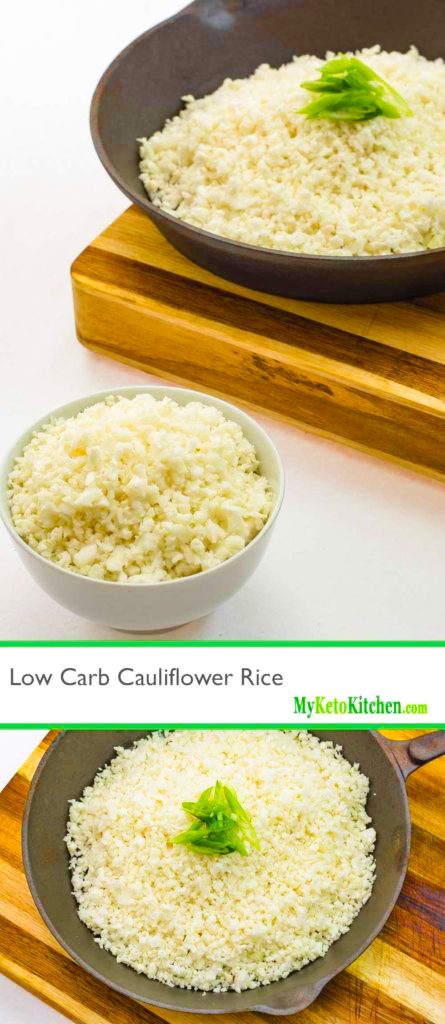
Cauliflower rice is one of the most practical rice substitutes on a keto or low-carb diet. One cup of plain cauliflower rice contains around 3g net carbs compared to 44g in white rice — a reduction of over 90% — and it cooks in under 10 minutes. The flavor is mild enough that it absorbs sauces and spices the way a grain would, which makes it useful across a wide range of recipes rather than just as a side dish.
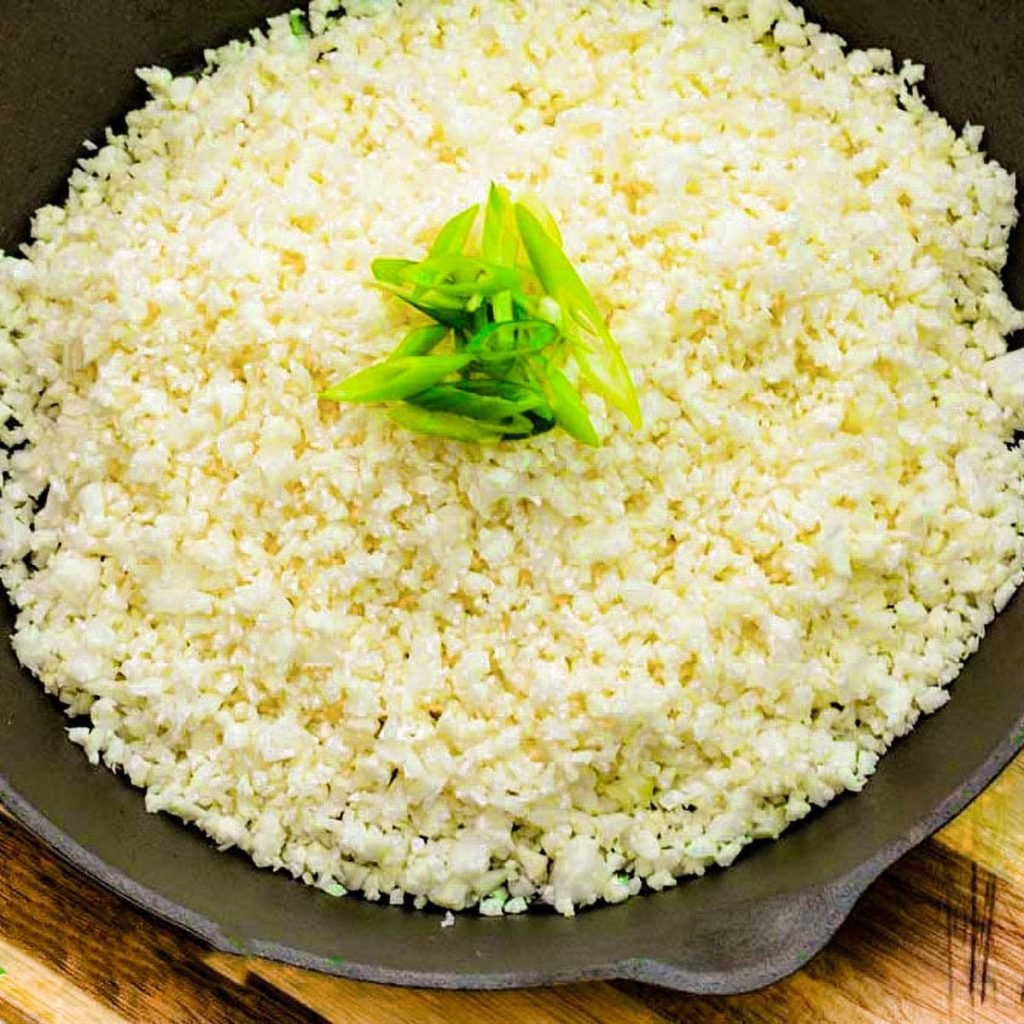
I’ve been making cauliflower rice as a keto staple since I started this site, and one thing I’ve learned from cooking it in all kinds of kitchens — including on a single-burner camp stove in the back of my van — is that the biggest factor in getting good texture has nothing to do with the method. It’s moisture. Any surface water on the florets when they hit the pan steams them instead of sautéing them, and you end up with a soft paste rather than distinct grains. A quick 10-minute air-dry on a dish towel after washing makes a real difference in the final result.
This page covers what cauliflower rice is, how it compares to regular rice on carbs and nutrition, three ways to rice a head of cauliflower (food processor, box grater, and knife), all three cooking methods with a quick-reference table, how to prevent mushy results, and storage and freezing instructions. The recipe card is further down — it hasn’t changed.
At a glance
What Is Cauliflower Rice
Cauliflower rice is fresh cauliflower that has been grated or pulsed in a food processor into small granules roughly the size of rice grains. It contains no actual rice — the name refers entirely to the texture and the way it functions in recipes.
Cauliflower is a non-starchy cruciferous vegetable. A 100g serving of plain cauliflower rice contains approximately 5g total carbohydrates and 2g dietary fiber, giving 3g net carbs. For context, 100g of cooked white rice contains around 28g carbohydrates with minimal fiber. That gap is why cauliflower rice became a keto pantry staple — it behaves like a grain in a recipe but carries almost none of the carb load. It is also naturally gluten-free and contains useful amounts of vitamin C, potassium, and folate that white rice doesn’t.
The trade-off is flavor. Raw cauliflower has a mild, slightly bitter edge that largely disappears with cooking. Properly cooked cauliflower rice, seasoned with salt and butter, has almost no perceptible cauliflower flavor — it takes on whatever seasoning or sauce surrounds it.
Cauliflower Rice vs Regular Rice
| Per 1 cup (cooked) | Cauliflower Rice | White Rice |
|---|---|---|
| Net carbs | ~3g | ~44g |
| Calories | ~27 | ~206 |
| Total carbs | ~5g | ~45g |
| Fiber | 2.5g | 0.6g |
| Protein | ~2g | ~4.3g |
| Vitamin C | ~52mg | 0mg |
| Gluten-free | Yes | Yes |
How to Make Cauliflower Rice
The food processor is the fastest and most consistent method for any amount over a single serving. The grater and knife methods work well for smaller quantities or when you don’t want to pull out equipment.
Food Processor Method (Recommended)
Cut the cauliflower head into even-sized florets. After washing, pat them dry with a dish towel and let them air-dry for a few minutes — surface moisture causes steaming in the pan rather than sautéing. Fill the food processor bowl no more than halfway. Pulse 8 to 12 times, stopping to check after every few pulses. You’re looking for pieces roughly the size of a rice grain. If any large pieces remain, remove them and process separately rather than continuing to pulse the whole batch — over-processing turns the smaller pieces to paste.
Work in batches for a full head of cauliflower. Overfilling the bowl results in uneven processing, with some pieces turning fine and mushy while larger chunks remain intact.
Box Grater Method (No Food Processor)
Use the medium-sized holes — the same side you’d use for cheddar. Cut the florets into flat-sided pieces that sit flush against the grater surface, which gives you more control and a more even result. Grate in short, firm strokes over a large bowl. This method takes around 10 to 12 minutes for a full head and produces a slightly coarser, more textured grain than the food processor. It’s a good option for smaller quantities.
Knife Method (Minimal Equipment)
Place florets on a cutting board and chop with a sharp chef’s knife using a rocking motion, gradually working the pieces down to grain size. The result will be less uniform than the other methods — some pieces will be larger, some finer. That’s acceptable in most recipes. This method is practical for one or two servings and useful when you’re camping, traveling, or working in a kitchen without a processor or grater.
How Many Cups of Cauliflower Rice per Head?
A large head of cauliflower (around 2 lbs / 900g) yields approximately 6 to 8 cups of raw cauliflower rice. A medium head (around 1 lb / 450g) yields 3 to 4 cups. Plan on 1 cup per person as a side serving.
How to Cook Cauliflower Rice
The stovetop sauté method gives the best texture for everyday use. The microwave is faster but produces a softer result with no browning. Oven roasting takes the longest but works well for large batches and gives a slightly drier, nuttier texture.
| Method | Time | Result | Best For |
|---|---|---|---|
| Stovetop (sauté) | 5–8 min | Distinct grains, slight browning | Most recipes, daily use |
| Microwave | 3–5 min | Soft, no browning | Speed; serving with saucy dishes |
| Oven (roast) | 10–12 min at 400°F | Dry, nutty, firm | Batch cooking, meal prep |
Stovetop (Recommended)
Heat a wide pan over medium-low heat. Add butter or oil and let it come to temperature before adding the cauliflower — putting it into a cold pan prolongs cooking and increases the risk of steaming rather than sautéing. Add the riced cauliflower and salt. Cook for 5 to 8 minutes, stirring continuously. You’re looking for grains that are tender with a little resistance — not soft through and through. Remove from heat as soon as the texture is right; it continues to cook in the residual heat of the pan if you leave it.
Butter gives a better result than neutral oil for plain cauliflower rice. It coats each grain and carries the salt more effectively. If you’re serving alongside a very fatty dish, skip the butter altogether — the recipe card notes this option.
Microwave
Place the riced cauliflower, butter, and salt in a microwave-safe dish with a lid. Microwave on high for 3 to 5 minutes, depending on your microwave’s wattage — 3 minutes for high-powered units, up to 5 for older or lower-wattage models. Allow to sit with the lid on for 2 minutes before serving; the retained steam continues cooking the cauliflower during this rest. Stir before serving.
Microwaved cauliflower rice is soft rather than sautéed, with no browning. It works well as a base for dishes that have their own sauce, where the rice absorbs liquid rather than standing alone. It’s the least effective method when you want distinct, separated grains.
Oven (Roasting)
Preheat the oven to 400°F (200°C). Spread the riced cauliflower in a single thin layer on a lined baking sheet — don’t pile it or it steams rather than roasts. Drizzle lightly with oil, season with salt and pepper, and toss to coat. Roast for 10 to 12 minutes, stirring once at the halfway point.
Roasted cauliflower rice is drier and firmer than sautéed, with a slightly nutty flavor from the edges that make contact with the hot pan. It reheats well without going mushy, making it the best option for meal prep batches. It also works as a base for dishes where you don’t want additional moisture.
How to Stop Cauliflower Rice Going Mushy
Mushy cauliflower rice has two main causes: excess moisture going into the pan, and too much time in the pan. Both are straightforward to avoid.
Start with dry cauliflower. After washing the florets, pat them completely dry or leave them on a dish towel for 10 minutes before ricing. Surface moisture turns to steam in a hot pan and changes the texture of the finished rice.
Don’t overfill the food processor. A half-full bowl processes more evenly. Overfilling produces a mix of fine, mushy pieces and large chunks in the same batch.
Use a wide pan on adequate heat. More surface area means moisture evaporates faster rather than pooling around the rice. For fresh cauliflower rice, medium-high heat is sufficient. For frozen, use high heat — lower heat allows ice crystals to melt back into the rice rather than evaporating off the pan.
Don’t cover the pan. A lid traps steam and softens the grains. Sauté uncovered and keep stirring.
Pull it off heat as soon as it’s done. Cauliflower continues to soften in residual pan heat. Move it to a serving bowl immediately once the texture is right.
How to Store and Freeze Cauliflower Rice
Raw cauliflower rice oxidizes quickly and develops a sulfur smell within 1 to 2 days in the refrigerator. Cook it the same day you rice it, or freeze it raw if you’re making a large batch.
Cooked cauliflower rice keeps for up to 4 days in a sealed container in the refrigerator.
To freeze raw cauliflower rice, spread it in a single layer on a baking sheet and freeze until solid — about 2 hours. Transfer to sealed freezer bags with as much air removed as possible to prevent freezer burn. Label with the date. Raw cauliflower rice keeps for up to 1 month in the freezer.
Do not freeze cooked cauliflower rice. The texture softens too much on reheating to be useful.
To cook from frozen, add the frozen rice directly to a hot pan without thawing first. Use high heat and keep stirring. Thawing first releases water into the pan, which softens the grains.
Ways to Use Cauliflower Rice
Cauliflower rice works as a direct substitute for white rice in almost any recipe. Because the flavor is mild, it absorbs whatever seasoning or sauce surrounds it.
As a plain side, cooked in butter with salt, it works alongside grilled meats, roasted vegetables, and any dish with a sauce — curries, stews, and braises in particular, because the rice absorbs the liquid much like regular rice would.
For keto fried rice, start with fully cooked, cold cauliflower rice so it holds together in the wok rather than steaming. The same technique applies as with regular fried rice: high heat, small amounts of fat, fast movement.
For keto bowls and curries, use it as a base wherever you’d normally use jasmine or basmati. Indian-spiced cauliflower rice, Mexican-seasoned cauliflower rice, and coconut cauliflower rice are all covered in separate recipes on this site — see the More Recipes section below.
For soup and congee, raw cauliflower rice can be added directly to simmering broth in the last few minutes of cooking. It softens quickly and takes on the flavor of the broth.
Cauliflower Rice
Rate it
Print Pin Share EmailUnit Conversion
Ingredients
- 1/2 head Cauliflower
- 3 ounces Butter optional (add butter if not eating with a fatty meal to kleepit keto )
- 1/2 teaspoon Salt
Instructions
- Cut the cauliflower into evenly sized florets and place into your food processor, only filling half the bowl at a time.
- Blend the cauliflower using the pulse setting. Continue to pulse until it resembles rice. If there are any large pieces, remove them and blend them separately.
- Heat a frying pan over medium low heat.
- Add the butter and salt, allow the butter to melt before adding the cauliflower.
- Saute the cauliflower for 5-8 minutes, whilst continually stirring.
- Remove from heat and serve. Enjoy.
Notes
Nutrition

Pro Tips
Get the cauliflower completely dry before ricing it. This is the single most impactful thing you can do for texture. Wet florets steam rather than sauté. Ten minutes on a dish towel after washing is enough.
Pulse the food processor — don’t blend continuously. Check the texture every few pulses. You’re aiming for rice grain size, not breadcrumbs. Once the finer pieces reach the right size, large chunks won’t catch up — remove them instead.
For the cleanest texture, make cauliflower rice the same day you’re using it. Raw cauliflower rice develops an off smell in the fridge after 1 to 2 days. If you’re batching ahead, freeze it raw immediately after processing.
Butter over oil for plain cauliflower rice. Butter coats each grain and carries salt more effectively than a neutral oil. If you’re keeping fat lower for a specific meal, a light drizzle of olive oil or avocado oil works. Water-based cooking liquids like broth add flavor without fat if needed.
One large head of cauliflower gives you 4 ready-to-cook portions. Rice the whole thing at once, freeze in 2-cup flat packs, and you have a week of sides that go straight from freezer to a hot pan in about 8 minutes.
Reader tips
“Simple and excellent. I added some turmeric and snipped garlic chives. Cauliflower — a reason to use my processor!”
★★★★★ Bea
“As a person who lives on rice and is trying to transition to a ketogenic diet, this recipe is amazing!”
★★★★★ Tanvi
Frequently Asked Questions
Yes. Cauliflower rice is one of the most keto-compatible side dishes available. One cup of plain cauliflower rice contains approximately 3g net carbs, compared to around 44g in a cup of cooked white rice. A standard serving won’t impact ketosis, particularly when the dish is paired with adequate fat and protein.
Plain cauliflower rice contains approximately 5g total carbohydrates and 2g dietary fiber per 100g serving, giving 3g net carbs. The recipe on this page — cooked with butter — contains 6g total carbs and 3g fiber per 100g serving, also 3g net carbs. Frozen store-bought cauliflower rice has similar values to plain, but check the label on seasoned products as added flavorings can increase the carb count.
A large head of cauliflower (around 2 lbs / 900g) yields approximately 6 to 8 cups of raw cauliflower rice. A medium head (around 1 lb / 450g) yields 3 to 4 cups. Plan on 1 cup per person as a side serving — a single large head will cover 6 to 8 servings.
The two main causes of mushy cauliflower rice are excess moisture and overcooking. Pat the florets dry before ricing them, use a wide pan on adequate heat, cook uncovered, and remove from heat as soon as the texture is right. When cooking from frozen, add it straight from freezer to a hot pan — thawing first releases water that saturates the grains.
Cooked cauliflower rice keeps for up to 4 days in a sealed container in the refrigerator. Raw cauliflower rice develops a sulfur smell after 1 to 2 days in the fridge, so if you’re not cooking it the same day, freeze it raw rather than storing it refrigerated.
Yes — freeze it raw, not cooked. Spread the raw riced cauliflower in a single layer on a baking sheet and freeze until solid (about 2 hours), then transfer to sealed freezer bags. It keeps for up to 1 month. Cook straight from frozen on high heat; thawing first releases moisture and softens the final texture.
Yes. The box grater method uses the medium-sized holes (the same side used for cheese) and takes around 10 to 12 minutes for a full head. A knife works too — chop florets finely on a cutting board using a rocking motion until they reach grain size. Both methods are fully functional; the food processor is simply faster and more consistent for larger quantities.
No — cauliflower rice contains no actual rice. It’s fresh cauliflower cut into small, grain-sized pieces. The texture is similar to rice when cooked, but it doesn’t expand or absorb liquid the way rice does and it won’t go sticky or starchy during cooking. The carb count is dramatically lower: 3g net carbs per cup versus 44g in white rice.



As a person who lives on rice and is trying to transition to a Ketogenic diet, this recipe is amazing! Totally trying it and posting the review!
I think you’ll be pleasantly surprised how cauliflower works as not only a low carb replacement for rice but also potato and other things as well.
Thank you so very much for this webpage, I am on Keto and found this very helpfull and a lot of ideas to try new recipes. Thank you.
Thank you Yolande, hope you enjoy your keto journey.
oh yum. I made this for the first time but certainly not the last time. Delicious.
It goes so well with so many other dishes. Thank you Rachel.
Simple and excellent. I added some tumeric and snipped garlic chives. Cauliflower
— a reason to use my processor!
Garlic chives are my favorite! Your additions sound delicious, Bea.
How long can the “rice” be refrigerated?
Hi William,
Uncooked rice will oxidize and turn brown within a couple of days. The cooked rice can be kept for up to a week in the fridge.
I hope that helps
Gerri