Lamb bone broth is a slow-simmered stock made from roasted lamb bones and aromatics, cooked long enough to extract collagen, gelatin, and minerals from the bones into the liquid. The result is a nutrient-dense broth that gels when chilled, with a rich, savory depth that a regular stock doesn’t have. It’s naturally zero-carb, keto-compatible, and works as a drinking broth, a soup base, or a cooking liquid for any dish that benefits from lamb flavor.
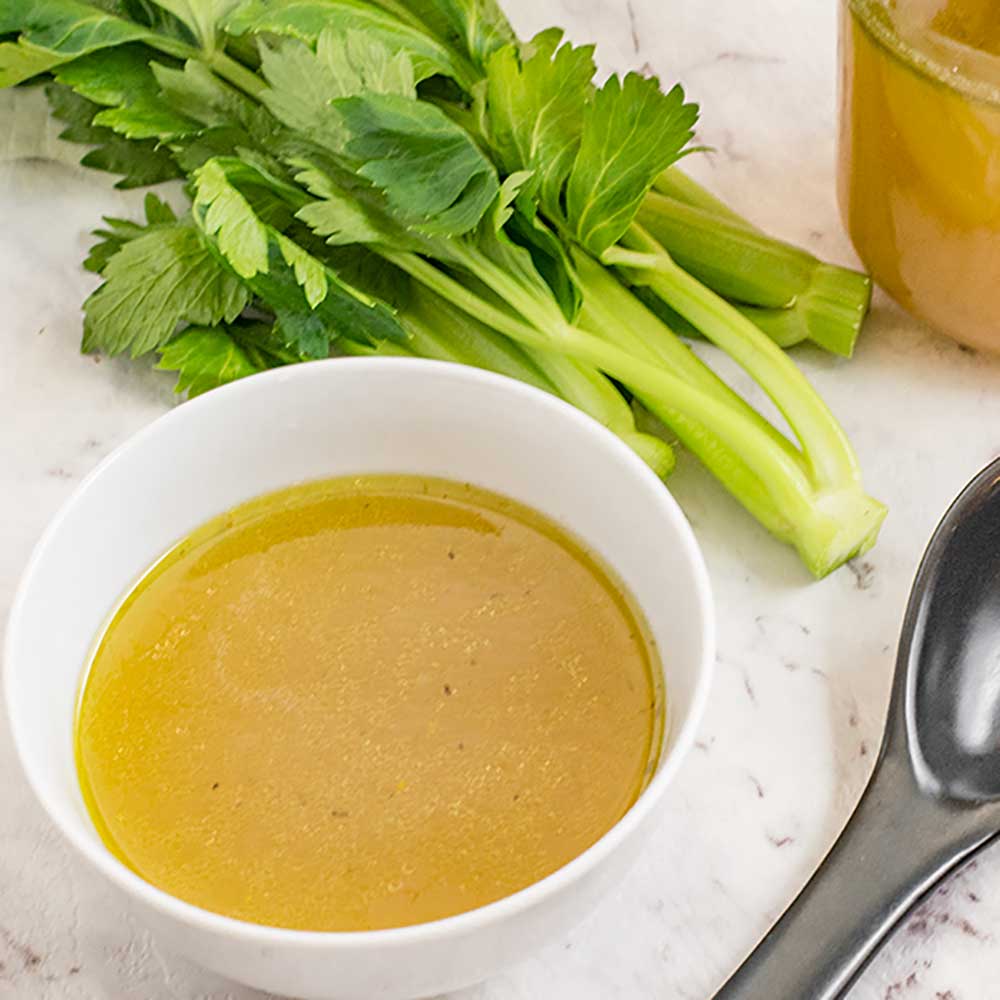
I make this from bones left over from other lamb recipes — most commonly from a lamb madras or a slow-roasted shoulder. The roasting step before the simmer isn’t optional if you want serious flavor. I’ve made versions both ways, and unroasted bones give you a lighter, cleaner stock — useful for some applications, but lacking the depth you get from bones that have spent time in a 400°F oven. On the road in the van where I don’t have oven access, I skip roasting and go direct to the pot; the broth still works, just with less complexity.
Below you’ll find a breakdown of which bones give the best results, how to avoid the gamey off-note that trips up a lot of first-time lamb broth makers, cook times for stovetop, slow cooker, and Instant Pot, and a test to confirm your broth has enough gelatin before you bottle it. The recipe card is further down — it hasn’t changed.
At a glance
What Is Lamb Bone Broth
Lamb bone broth is a long-simmered stock made by cooking lamb bones in water for 8 hours or more, long enough to break down the collagen in the connective tissue and cartilage into gelatin. The gelatin is what gives a good bone broth its characteristic wobble when cold and its silky texture when hot. A quick stock cooked for 4 hours or less won’t fully extract it.
Lamb broth has a stronger, more distinctive flavor than beef or chicken bone broth — earthier and slightly more aromatic, particularly when herbs like rosemary and thyme are used. This makes it especially suited to lamb-forward dishes, Mediterranean-style soups and stews, and any recipe where you want the broth itself to contribute flavor rather than just serve as a neutral base.
Bone Broth vs Lamb Stock — What’s the Difference?
The terms are often used interchangeably, but cook time is the main distinction. Lamb stock is typically cooked for 4–8 hours — long enough to extract flavor but not necessarily to fully convert the collagen. Lamb bone broth is cooked for 10 hours or longer, which extracts more gelatin, minerals, and amino acids from the bones. Both are useful; bone broth is more nutrient-dense and better suited to drinking straight or as a keto electrolyte replacement. Stock is lighter and more neutral as a cooking base.
Which Bones to Use
Not all lamb bones produce the same result. The best bone broth comes from a mix of collagen-rich bones (which provide gelatin and body) and meatier bones (which add flavor).
Collagen-rich: knuckle bones, neck bones, and trotters (lamb feet). These have the most cartilage and produce a broth that gels strongly when chilled.
Meatier and flavorful: shank, shoulder, and leg bones. These have more residual meat and fat, which adds savory depth. Roasted leg and shoulder bones from a Sunday roast are excellent.
Leftover bones from cooked lamb — any cut — work well. Store them in a sealed bag in the freezer until you have enough to make a batch. A mix of bone types generally gives better results than using a single type.
Avoid lamb rib bones in large quantities — they have a higher fat content that can make the broth greasy and contribute to the gamey notes covered below.
If purchasing from a butcher, ask specifically for knuckle bones or neck bones. Butchers who stock lamb regularly will often have these at low cost or free.
How to Make Lamb Bone Broth
The full method is in the recipe card below. These notes cover the key decisions that affect the final quality.
Roasting the bones: Roasting at 390–400°F (200°C) for 30–45 minutes before adding to the pot drives the Maillard reaction on the bone surface, which creates the brown color and savory depth in the finished broth. This is optional if you’re using leftover cooked bones — they’ve already had heat exposure — but strongly recommended for raw bones. Don’t skip the fat and juices that render into the roasting pan; deglaze these into the pot.
Skimming: In the first 30–60 minutes of simmering, a grey foam rises to the surface. Skim it off with a spoon. This is denatured protein, not harmful, but it makes the broth cloudy and slightly bitter if left in. Skimming during this window produces a cleaner, clearer broth.
Apple cider vinegar (optional): Many bone broth recipes include 1–2 tablespoons of apple cider vinegar added with the water. The acid helps draw minerals from the bones during the long simmer. It doesn’t affect the final flavor at these concentrations. This recipe works well without it, but you can add a tablespoon along with the water if you want to maximize mineral extraction.
Never boil. A rolling boil emulsifies the fat into the liquid and produces a cloudy, greasy broth. Keep the heat low — you want a very gentle simmer with occasional small bubbles breaking the surface. If the broth is boiling, it’s too hot.
Cook Time by Method
Stovetop is the traditional method and gives the most control. Slow cooker is the most hands-off. Instant Pot is fastest but produces a slightly different flavor profile due to pressure cooking.
| Method | Bone Broth (max gelatin) | Light Stock (quicker) | Best for |
|---|---|---|---|
| Stovetop | 12–24 hours | 4–8 hours | Flavor control, traditional method |
| Slow Cooker | 16–24 hours (low) | 8–12 hours (low) | Hands-off, overnight, easiest |
| Instant Pot | 3–4 hours (high pressure) | 1.5–2 hours (high pressure) | Speed, limited time |
Slow Cooker Method
Add the roasted (or raw) lamb bones to the slow cooker along with the chopped vegetables, garlic, rosemary, thyme, and salt. Pour in enough cold water to cover the bones fully — typically 2–3 quarts. If using, add 1 tablespoon apple cider vinegar. Cook on low for 16–24 hours for bone broth, or 8–12 hours for a lighter stock. Do not cook on high — the higher temperature produces a cloudy, less refined broth. Strain through a fine-mesh sieve. Refrigerate, then skim the fat cap from the surface before using.
The slow cooker is the most hands-off method and produces consistently good results without requiring attention during the cook.
Instant Pot / Pressure Cooker Method
Add all ingredients to the Instant Pot. Fill to the max line with cold water. Seal the lid and set the valve to sealing. Cook on Manual High Pressure for 3–4 hours for bone broth or 1.5–2 hours for stock. Allow to depressurize naturally — do not quick-release, as the sudden pressure change can make the broth cloudy. Strain through a fine-mesh sieve. Refrigerate and skim the fat before using.
Note: pressure-cooked bone broth tends to be slightly less clear than stovetop or slow cooker versions. The flavor is strong but the texture can differ slightly. Extend the time to 4 hours if you want maximum gelatin extraction.
How to Avoid Gamey Flavor
Lamb broth has a stronger flavor profile than beef or chicken, and some batches develop an unpleasant gamey or funky quality that makes the broth difficult to drink or use as a base. This is almost always caused by one of three things.
Too much fat on the bones. Lamb fat, particularly from the tail and rib area, is the primary source of the gamey quality. Before roasting, trim any large pockets of fat from the bones. This applies especially to neck bones and ribs.
Boiling rather than simmering. A rolling boil emulsifies the fat into the liquid rather than allowing it to rise to the surface where it can be skimmed. Keep the heat low — a gentle simmer only.
Not washing the bones. Raw bones should be rinsed under cold water and dried before roasting. This removes surface blood and bone fragments that can give the broth an off taste.
Using the fat cap correctly. After the finished broth is chilled, a layer of solid white fat forms on the surface. Remove this with a spoon before using the broth. The fat itself (lamb tallow) can be reserved and used as a cooking fat — it’s keto-compatible and has a high smoke point — but leaving it in the broth will make it taste heavier and fattier than it should.
The Gelatin Test
A correctly made bone broth should gel when cold. Pour a small amount into a bowl and refrigerate for 2–3 hours. If it sets to a jelly-like consistency — similar to loose gelatin or panna cotta — the collagen extraction was successful. If it stays completely liquid, the broth is thin and hasn’t extracted enough gelatin.
Thin broth is caused by: too short a cook time, too much water relative to bones, or using bones with very little cartilage. The fix is to simmer longer, add more bones, or reduce the finished broth by simmering it uncovered for 30–60 minutes to concentrate it.
A fully gelled broth is not overcooked — it’s correctly cooked. It liquefies again immediately when warmed.
How to Use Lamb Bone Broth
As a drinking broth: season with salt and heat in a mug. Used this way it’s an effective keto electrolyte drink — it provides sodium, potassium, and magnesium without carbs. Particularly useful in the early stages of a keto diet when electrolyte loss is highest.
As a soup and stew base: use it anywhere a recipe calls for stock or broth. The lamb flavor pairs best with Middle Eastern, Mediterranean, and Indian-spiced dishes. Use it in place of water when making keto soups and stews for an immediate flavor upgrade.
As a cooking liquid: use it to braise vegetables, cook cauliflower rice, or deglaze a pan after searing meat. Any application where water would normally be used benefits from the added flavor and gelatin.
As a sauce base: reduce the broth by simmering uncovered until it’s concentrated and slightly thick. This makes a strong lamb jus that works as a sauce on its own or a base for pan sauces.
Lamb Bone Broth
Rate it
Print Pin Share EmailUnit Conversion
Ingredients
- 1 pound lamb bones
- 1 tablespoon olive oil
- 1 small Onion large diced
- 3 medium carrots cut into chunks
- 3 sticks celery roughly chopped
- 3 cloves garlic
- 3 sprigs Rosemary
- 5 sprigs thyme
- 1-3 gallons water
- Salt optional
Instructions
- Preheat oven to 200C/390F.
- Place lamb bones into a roasting pan and cook for 30-40 minutes, until well browned.1 pound lamb bones
- In a large stock pot, add the oil and place over medium heat.1 tablespoon olive oil
- Add the onion, carrot, celery, garlic, thyme and rosemary and saute for 5 minutes.1 small Onion, 3 medium carrots, 3 sticks celery, 3 cloves garlic, 3 sprigs Rosemary, 5 sprigs thyme
- Add the lamb bones and scrape any fat or juices from the roasting pan into the pot.
- Add 1 gallon of water and allow to come to a simmer before reducing the heat to low.1-3 gallons water
- Add 1 gallon of water and allow to come to a simmer before reducing the heat to low. Simmer for 8-24 hours uncovered, adding more water when the level drops. The amount of water you need will depend on how long you wish to cook the broth for.
- After the broth is cooked for your desired length of time, strain the broth through a fine mesh strainer.
- Enjoy hot or chill and use as desired.Salt
Notes
Nutrition

Pro Tips
Roast the bones even if they’re from a previous cooked dish. Leftover cooked bones benefit from a second pass under heat. A 20-minute roast at 400°F deepens the color and flavor of the finished broth even from already-cooked bones.
Skim during the first hour. The grey protein foam that rises in the early stage of simmering is the main contributor to a cloudy, slightly bitter broth. Set a timer and skim every 15–20 minutes for the first hour. After that, the broth will stay reasonably clear without attention.
Save the fat cap. The solid white layer that forms on top of chilled broth is lamb tallow — a useful keto cooking fat with a high smoke point. Scrape it into a jar and use it to sear meat, roast vegetables, or as a starting fat for stews. Don’t discard it.
Freeze in 1-cup portions. Most recipes call for 1 or 2 cups of broth. Freezing in 1-cup silicone molds or small containers means you can pull out exactly what you need without defrosting an entire batch. Ice cube trays work for small amounts when a recipe calls for just a splash.
Extend the simmer if the broth doesn’t gel. If the cooled broth stays liquid rather than setting to a jelly, it hasn’t extracted enough gelatin. Next time: simmer longer, use more cartilage-rich bones, or add a set of knuckle bones. For the current batch, you can reduce it by simmering uncovered for an hour to concentrate flavor and gelatin.
The vegetables can be eaten after the cook. Particularly the carrots — bone broth braised carrots come out soft and intensely flavored. Salt lightly and eat them as a side.
Reader tips
“I plan to keep the bones going for 36–48 hrs in my slow cooker… but at 20 hours, I fished out a chunk of carrot, sprinkled a tiny bit of flaky sea salt and OH MY GOODNESS. Bone Broth Braised Carrots everyone! Must Try! All the carrot has been eaten and next time I’ll be adding extra carrots!”
★★★★★ Hannah Mah
Frequently Asked Questions
Not quite. Both are made by simmering lamb bones with vegetables and herbs, but bone broth is cooked for significantly longer — typically 12 hours or more. The extended cook time breaks down the collagen in the bones into gelatin, which gives bone broth a thicker consistency and higher nutrient density. Lamb stock, cooked for 4–8 hours, is lighter and better suited as a neutral cooking base. This recipe makes bone broth when simmered for the longer end of the stated range.
A minimum of 8 hours is needed to extract meaningful gelatin from the bones. For maximum collagen extraction, simmer for 16–24 hours. The longer the simmer, the more gelatin, minerals, and amino acids are drawn out of the bones. You can tell the broth is ready when it sets to a jelly-like consistency when cooled — this is the gelatin test. Keep adding water as needed to maintain the level.
Yes. Add all ingredients to the slow cooker, cover with cold water, and cook on low for 16–24 hours for bone broth or 8–12 hours for a lighter stock. Do not use the high setting — it boils the broth rather than simmering it gently, which produces a cloudier, less refined result. The slow cooker is the most hands-off method and reliably produces good broth without monitoring.
Yes. Add all ingredients, fill to the max line with cold water, seal, and cook on Manual High Pressure for 3–4 hours for bone broth. Allow the pressure to release naturally — do not quick-release. Natural release takes around 30 minutes and produces a clearer broth. Strain through a fine-mesh sieve, refrigerate, and skim the fat before using.
No, but it makes a significant difference. Roasting at 390°F (200°C) for 30–40 minutes develops browned surface compounds that add depth and color to the finished broth. If you’re using leftover cooked bones, they’ve already had heat exposure and can go straight in the pot. If you have no oven access — camping or van cooking — skip roasting and proceed directly to the simmer. The broth will be lighter in color and slightly less complex, but still produces a usable result.
The most common causes are excess fat on the bones, boiling rather than simmering, or not washing the bones before cooking. Trim large fat pockets from the bones before roasting, keep the heat at a gentle simmer throughout, and skim the surface foam during the first hour. After straining, remove the fat cap from the chilled broth before using — it’s the fat, not the bones themselves, that carries most of the gamey quality.
Pour a small amount into a bowl and refrigerate for 2–3 hours. If it sets to a jelly-like consistency, the gelatin extraction was successful. If it stays liquid, the broth is thin — extend the simmer time in future batches, use more cartilage-rich bones, or reduce the current batch by simmering uncovered for 30–60 minutes.
Yes. Let it cool completely, portion into airtight containers, and freeze for up to 3 months. Freeze in 1-cup portions so you can defrost only what each recipe needs. Ice cube trays work well for small quantities. Thaw overnight in the refrigerator or warm gently on the stovetop from frozen.
Yes. This recipe contains 1g net carbohydrates per cup serving, from the vegetables used in the simmer — which are strained out before serving. The broth itself is essentially carb-free and contains protein, fat, and minerals from the bones. It’s suitable for keto, paleo, and low-carb diets.
Yes. Season with salt, heat, and drink from a mug. This is a common way to consume bone broth on keto specifically because it provides electrolytes — sodium, potassium, and magnesium — without carbohydrates. It’s particularly useful in the early stages of a ketogenic diet when electrolyte loss is highest, which is sometimes called the keto flu.



Is it mandatory to roast the bones. Can it be skipped and directly put bones and veggies in water?
Hi Neenu. You can skip roasting but Ive found roasting the bones adds much more flavor
I plan to keep the bones going for 36-48 hrs in my slow cooker… but at 20 hr, realizing the vegetables have added all they could by this point, I fished out a chunk of carrot per my curiosity, sprinkled a tiny bit of flaky sea salt and OH MY GOODNESS. Bone Broth Braised Carrots everyone! Must Try!
Needless to say, all the carrot has been eaten. And next time, I’ll be adding extra carrots!
I have an uncooked lamb soup bone with quite a bit of meat on it. Do I roast it or not? Never cooked lamb before so all this is new. I’d like to use a crockpot if I could also. Thx
Hi Jan, yep, roast it for 30-40 minutes.
I made this bone broth to soothe IBS, without salt; Then I can add salt and freshly ground real black pepper as needed.
Nice. I hope it worked for you, Alicia.
Just wondering if this can be made in a slow cooker? Thanks!
Hi Lilly, yes, it indeed can. Slow cook for the same amount of time and see how that goes.
Hi, this is the first time I have tried to make a broth – and I was just wondering whether the vegetables that have been used can be kept as well after straining the liquid through the sieve. It seems such a waste to throw them away. I let my broth simmer for 20 hours or so and the smell is absolutely delicious. Thank you for having shared this recipe.
Hi Edward,
After simmering for so long, all the flavor has been sucked out of the vegetables. You can definitely use them to bulk out a soup but they won’t add much in terms of flavor!
This broth looks tasty and I’d love to try making it. I’m just wondering if you can use bones from leftover lamb leg roasts and, if so, should the leftover bones be roasted for 30-40 mins as in the recipe or is it better to skip this step?
Thanks in advance for any advice.
Hi Gaelen,
I haven’t tried making it with leftover roast bones but I would recommend giving them a shorter roasting (say 15-20 minutes) to get some good caramelization first. It will just give it a deeper flavor. I hope that helps!
I’ve never had a bone broth I could stand to just drink until this one. The thyme and rosemary make such a difference! FYI: I used beef marrow bones.
Glad you enjoyed it Raylene!
Lovely smells coming from the pan can’t wait to try!!
Thank you for this awesome looking and healthy recipe..