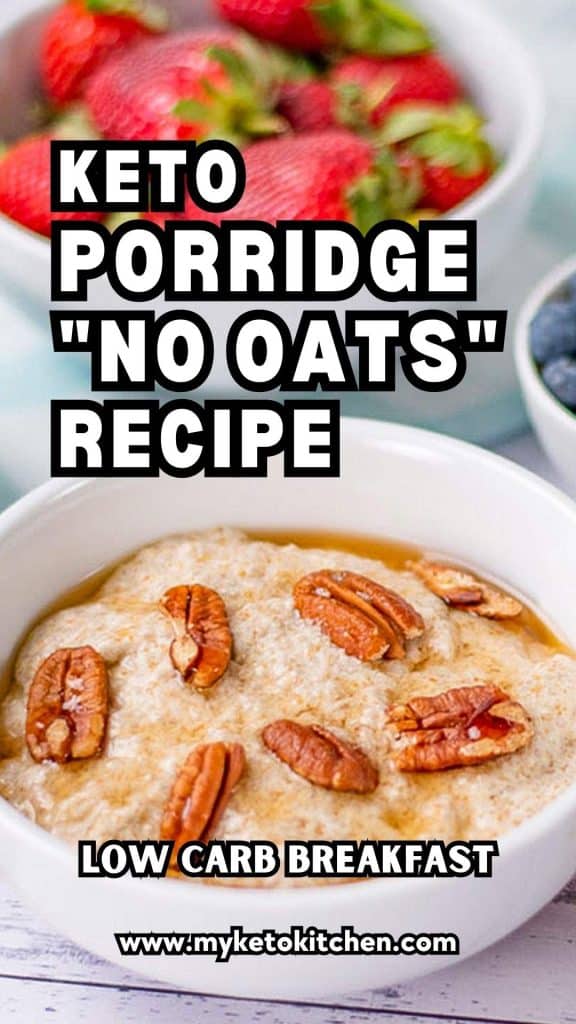
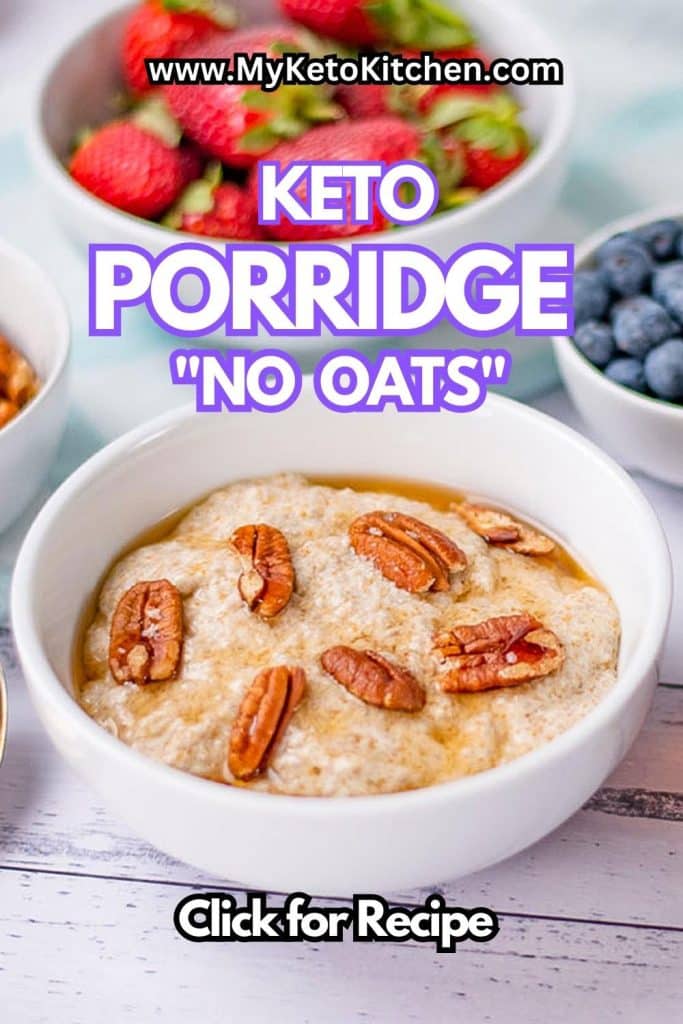
Real oats are off the table on keto — a half cup of rolled oats has around 24g of carbohydrates, which will blow your daily limit in a single bowl. This recipe replaces them with golden flaxseed meal, chia seeds, and coconut flour: a combination that gives you the same thick, warming texture as a bowl of porridge with 3g net carbs per serving. No grains, no gluten, and no compromise on how filling it is.
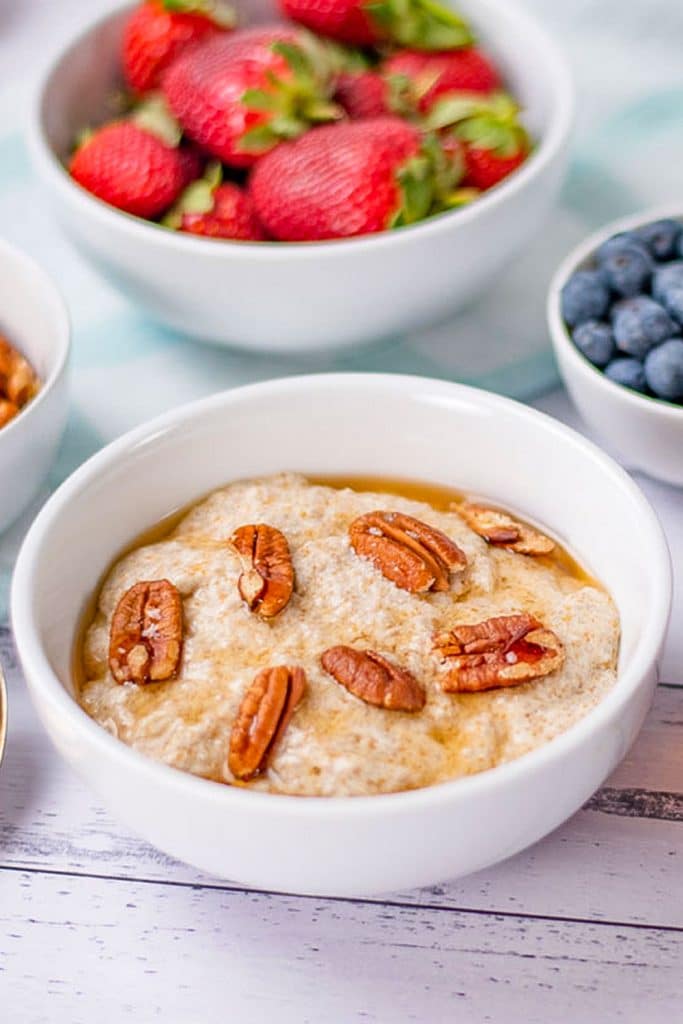
I keep the dry ingredients pre-mixed in a jar in the van so breakfast is just a matter of adding liquid and putting it on the burner for a few minutes. Flaxseed and chia both absorb liquid quickly, which means this recipe works equally well on a stovetop, in the microwave, or cold out of the fridge as overnight oats — whichever suits your setup that morning.
Below you’ll find a breakdown of why each ingredient works, how to make it three different ways, the best toppings and flavor variations, and how to batch prep a week’s worth in advance. The recipe card is further down.
At a glance
Can You Eat Oatmeal on a Keto Diet?
No. Traditional oatmeal is made from oats, which are a grain. A single half-cup serving of rolled oats contains approximately 24g of carbohydrates — more than most people’s entire daily keto carb allowance. Gluten-free oatmeal has the same carb problem; removing gluten doesn’t change the carb content.
Keto oatmeal replaces oats entirely with low-carb seeds and flours that absorb liquid and thicken in the same way. The result looks like porridge, eats like porridge, and keeps you full — without the blood sugar spike.
What Goes Into Keto Oatmeal and Why
The three core ingredients each do a specific job:
Golden flaxseed meal
Golden flaxseed meal is ground golden flax — milder in flavour than brown flaxseed, which can taste bitter and grassy. It thickens when combined with liquid and heat, contributes fiber, and provides omega-3 fatty acids. If you only have whole flaxseeds, grind them in a coffee grinder or blender first. Brown flaxseed works as a substitute but will give the porridge a stronger, more savoury taste.
Chia seeds
Chia seeds absorb up to ten times their weight in liquid, which is what gives this porridge its thick, creamy consistency. They also add fiber and healthy fats. Whole chia seeds give the porridge a slightly textured feel similar to tapioca; if you prefer a completely smooth bowl, you can grind them before adding.
Coconut flour
Coconut flour is highly absorbent and adds body to the porridge without a strong coconut flavour. A small amount goes a long way — two tablespoons is enough to noticeably thicken the mixture. It can be swapped for almond flour, but you’ll need to use more (around four tablespoons) since almond flour absorbs less liquid.
The rest of the ingredients
Liquid — almond milk, coconut milk, or water
Unsweetened almond milk and coconut milk are the most common choices. Both are low in carbs and add creaminess without affecting the macros significantly. Full-fat coconut milk from a can (using both the liquid and the firm part) makes for a richer, thicker result. Water works too — one reader used triple the amount of water with no almond milk and reported it thickened immediately.
Heavy cream
The recipe includes two tablespoons of heavy cream, which adds fat and richness. This is what keeps you full well past breakfast. Skip it to make the recipe dairy-free and replace with extra coconut milk.
Sweetener
The recipe uses sugar-free maple syrup as the sweetener. Erythritol, monk fruit, allulose, or stevia all work. Allulose is worth trying here — it dissolves completely without a cooling aftertaste and behaves like sugar in terms of sweetness and texture.
Three Ways to Make It
Stovetop (recommended)
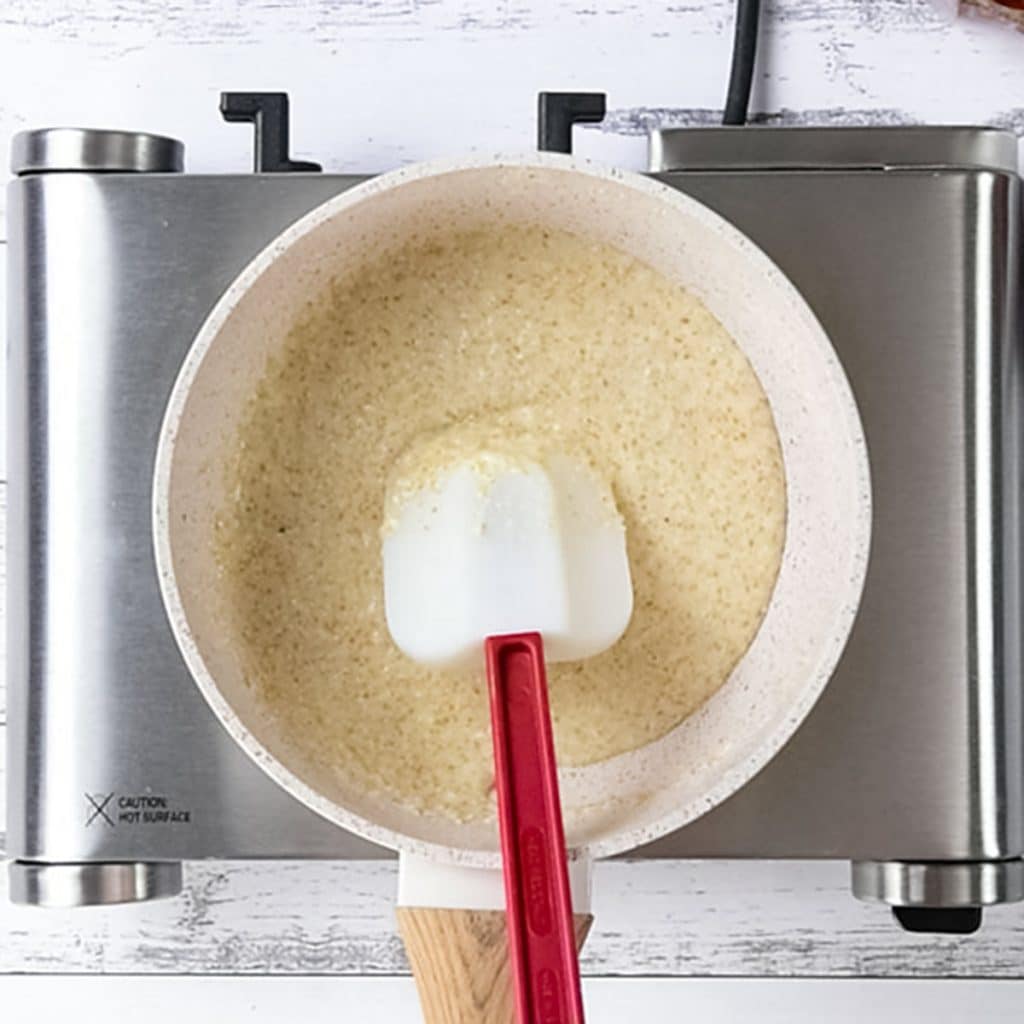
Combine all dry ingredients in a small saucepan. Add the liquid and stir to combine. Place over medium heat and whisk constantly for 8–10 minutes until the mixture thickens to your preferred consistency. This method gives you the most control over texture — pull it off early for a looser bowl, leave it longer for something firmer. Keep whisking; if you leave it unattended it can catch on the bottom.
Microwave
Combine all ingredients in a microwave-safe bowl and stir to mix. Microwave on high for 2 minutes. Remove, whisk well. Microwave for a further 1 minute. Add more milk to loosen if needed before serving. This is the fastest method and the one that suits a camp or van setup where you’re running on a portable battery inverter or have access to a microwave at work.
Overnight oats (cold)
This is the same principle behind the keto overnight oats recipe, which uses a similar base and sets in the fridge without any cooking. Combine all ingredients in a jar or airtight container, stir well, and refrigerate for at least 4 hours or overnight. The chia seeds and flaxseed will absorb the liquid completely and the mixture sets to a thick, spoonable consistency. Eat cold straight from the jar or microwave for 30–40 seconds to warm through. This is the best option for meal prep — make four to five servings on Sunday and grab one each morning.
How to Make It — Cook Method Comparison
| Method | Time | Best for | Notes |
|---|---|---|---|
| Stovetop | 8–10 min | Best texture control | Whisk constantly, medium heat |
| Microwave | 3 min | Fastest method | 2 min, stir, then 1 more min. Add milk to loosen |
| Overnight (cold) | 4+ hrs (no cook) | Meal prep, no heat needed | Combine in jar, refrigerate, eat cold or warm briefly |
Keto Porridge Variations
The base recipe is plain and neutral — it’s designed to be a canvas. Here are the most practical flavor variations:
Chocolate
Add one tablespoon of unsweetened cocoa powder or cacao powder to the dry ingredients before cooking. Top with a few sugar-free chocolate chips.
Cinnamon roll
Add an extra half teaspoon of cinnamon and a teaspoon of vanilla extract. Drizzle with sugar-free maple syrup and top with chopped pecans.
Peanut butter
Stir one tablespoon of natural peanut butter through the cooked porridge. Any nut butter works — almond or macadamia both good options.
Berry swirl
Mash a small handful of raspberries or strawberries with a fork, add a few drops of sweetener, and swirl through the bowl after cooking.
Protein porridge
Replace one tablespoon of coconut flour with one tablespoon of unflavored whey protein isolate or micellar casein. Adds protein and creaminess without significantly changing the texture.
Hemp seed porridge
Add two tablespoons of hemp hearts (shelled hemp seeds) alongside or instead of the flaxseed. Hemp hearts are keto-friendly, mild in flavour, and high in omega-3s and protein.
Almond flour swap
Replace the coconut flour with four tablespoons of almond flour. Use coconut milk as the liquid for a richer result. The porridge will be slightly less thick but still holds well.
Toppings for Keto Oatmeal
Toppings are where you make the bowl your own. All of the following are keto-compatible:
- Chopped pecans, walnuts, or almonds
- Hemp hearts
- Fresh raspberries, blueberries, or sliced strawberries
- Sugar-free maple syrup
- A spoonful of nut butter
- Coconut flakes (unsweetened)
- Cacao nibs
- A drizzle of heavy cream
- Pinch of flaky salt — works particularly well with the peanut butter variation
Meal Prep and Storage
Dry mix batch: Pre-mix the dry ingredients (flaxseed meal, chia seeds, coconut flour) in a large jar and store at room temperature. When ready to cook, scoop out the correct amount, add liquid, and cook. This is the most practical approach for daily use — no measuring required in the morning.
Cooked porridge: Store in the fridge for up to three days in an airtight container. Reheat on the stovetop over low heat or microwave for 60 seconds, adding a splash of milk to loosen. The porridge will have thickened further in the fridge.
Overnight oats batch: Make up to five servings in individual jars on Sunday. Keep refrigerated and grab one each morning. Add toppings fresh each day rather than storing them in the jar.
Freezing: Portion cooked porridge into individual containers and freeze for up to three months. Thaw overnight in the fridge and reheat as above.
Why You’ll Love This Keto Chia Seed Porridge
- Quick & Easy: Ready in just 3 minutes!
- Healthy & Satisfying: Packed with healthy fats and fiber to keep you full and energized.
- Low Carb & Keto-Friendly: Perfect for those following a ketogenic diet.
- Customizable: Add your favorite toppings for a personalized breakfast bowl.
Why This Recipe Works
Traditional oatmeal is made from oats, which are high in carbohydrates and unsuitable for a strict keto diet. This recipe uses a clever combination of coconut flour and chia seeds to create a creamy and delicious low-carb alternative that mimics traditional oatmeal’s texture but with the chia seeds’ superior health benefits.
These ingredients provide a similar texture and consistency to oatmeal while keeping the carb count low.
This recipe is part of my keto breakfast collection, where you’ll find my healthy keto frittata, super-easy keto omelet, and crunchy keto cereal.
Ingredients
- 2 tablespoons coconut flour – Adds creaminess and helps thicken the porridge.
- 1 tablespoon chia seeds—Chia seeds contribute to the creamy texture and add healthy fats and fiber, just like in chia seed oatmeal.
- 1/2 teaspoon cinnamon – Provides warmth and flavor.
- 1/4 teaspoon vanilla extract – Enhances the overall flavor.
- Pinch of salt – Balances the sweetness.
- 3/4 cup almond or coconut milk – Use your preferred milk for the desired creaminess.
- Optional: Sweetener to taste (e.g., erythritol or stevia) – Adjust sweetness according to your preference.
How To Make Low-Carb Keto Porridge
- Combine dry ingredients: In a small saucepan, combine the coconut flour, chia seeds, cinnamon, vanilla extract, and salt.
- Whisk in milk: Gradually whisk in almond or coconut milk until smooth.
- Cook: Place the saucepan over medium heat and bring the mixture to a simmer, stirring constantly.
- Thicken: Reduce heat to low and cook for 2-3 minutes or until the porridge thickens to your desired consistency, similar to chia seed oatmeal.
- Sweeten & serve: Remove from heat and sweeten to taste, if desired. Serve warm with your favorite toppings.
Keto Oatmeal – Low Carb Porridge
Rate it
Print Pin Share EmailUnit Conversion
Ingredients
- 2 tablespoons Golden Flaxseed Meal
- 2 tablespoons Coconut Flour
- 2 tablespoons Chia Seeds
- 1/2 cup Unsweetened Almond Milk
- 2 tablespoons Heavy Cream
- 2-3 tablespoons Sugar-Free Maple Syrup
- 1 teaspoon Vanilla Essence
Instructions
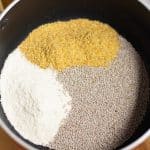
- Place the dry ingredients into a small saucepan and mix together.2 tablespoons Golden Flaxseed Meal, 2 tablespoons Coconut Flour, 2 tablespoons Chia Seeds

- Add the remaining ingredients and mix.1/2 cup Unsweetened Almond Milk, 2 tablespoons Heavy Cream, 1 teaspoon Vanilla Essence
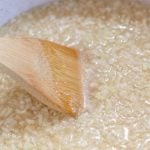
- Place the saucepan over medium heat and whisk the ingredients together for about 10 minutes until it has thickened and is warmed through.

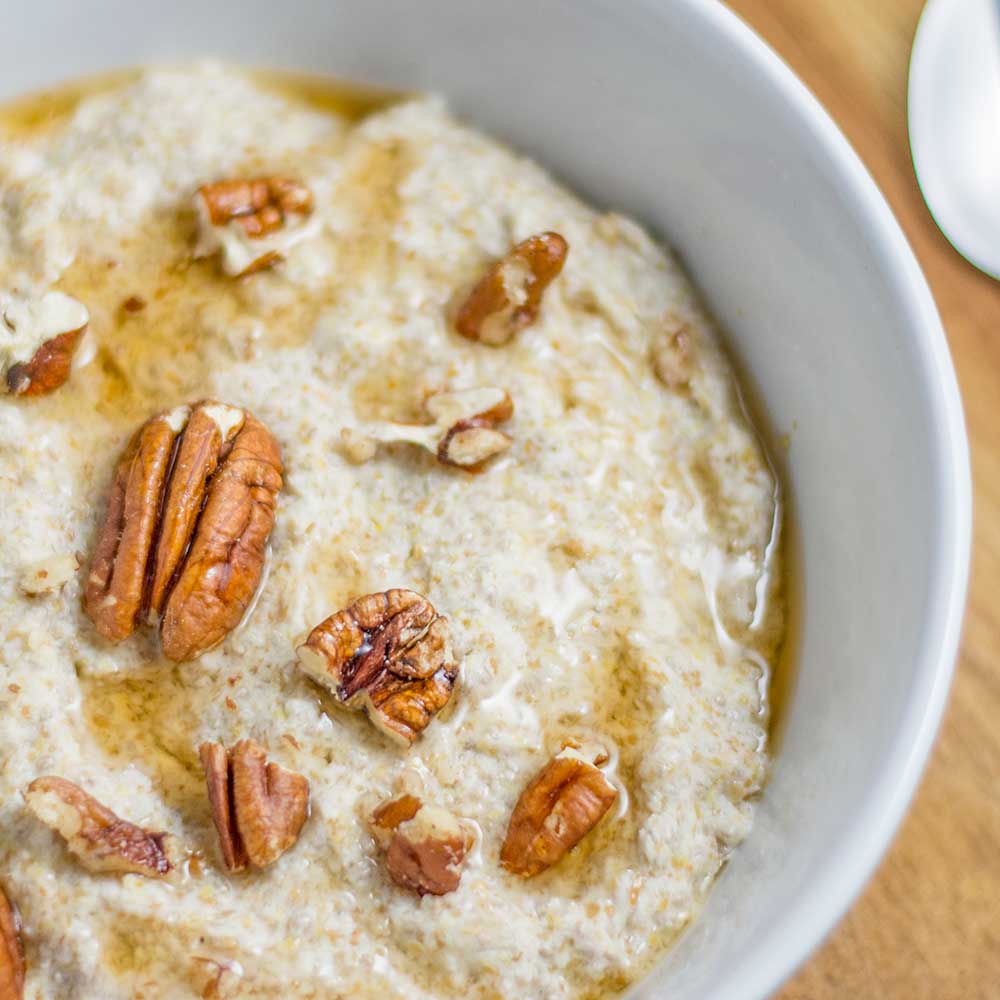
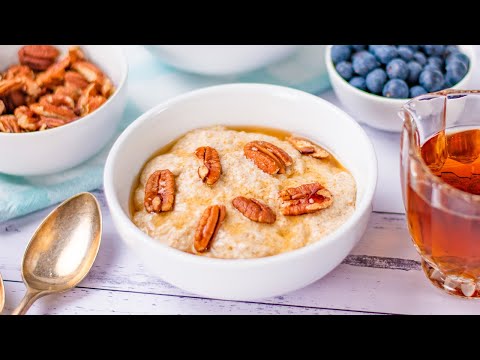
- Pour into a bowl and add toppings of your choice — chopped pecans and sugar-free maple syrup work well, as does a spoonful of nut butter or fresh berries.2-3 tablespoons Sugar-Free Maple Syrup
Video
Notes
Nutrition

Pro Tips
Whisk constantly on the stovetop. Coconut flour and chia seeds both catch and clump on the bottom of the pan if left unattended. Medium heat with constant whisking for the full 8–10 minutes gives you an even, lump-free result.
Pre-mix the dry ingredients in bulk. Measure once, store in a jar, scoop as needed. This turns a 10-minute breakfast into a 3-minute one and makes the recipe genuinely practical every morning rather than just weekends. The ratio is fixed — just multiply it up.
Golden flaxseed over brown. Brown flaxseed meal has a stronger, more bitter flavour that pushes the porridge toward savoury when you want something neutral. Golden flaxseed is worth buying specifically for this recipe.
Adjust liquid to your preference. The recipe produces a thick result by default. For a looser, more pourable consistency, stir in an extra two to four tablespoons of almond milk after cooking. If it’s too loose, cook for an extra minute — both the chia and flaxseed will continue absorbing.
Add sweetener at the bowl stage. Sugar-free maple syrup is easier to control as a finishing drizzle than when mixed in during cooking, where the sweetness gets lost in the heat. Taste first, sweeten to preference.
Reader tips
“I didn’t have almond milk so used water (and tripled it — it thickened immediately when I added the liquid). I missed oatmeal and this works well instead.”
★★★★★ Mary
“Love it! A real morning treat!”
★★★★★ Andrew Barr
Frequently Asked Questions
No. Regular oatmeal is made from oats, which are high in carbohydrates. A half-cup serving contains approximately 24g of carbs — more than most people’s full daily keto allowance. Even gluten-free and steel-cut oats are too high in carbs for a ketogenic diet. Keto oatmeal replaces oats entirely with low-carb alternatives that replicate the texture without the carbs.
The most effective combination is golden flaxseed meal, chia seeds, and coconut flour. Each does a specific job — flaxseed adds body and omega-3s, chia seeds thicken the mixture through liquid absorption, and coconut flour adds creaminess. Hemp hearts are another option that gives the porridge a texture closer to real oats. Almond flour works as a substitute for coconut flour but requires a larger quantity.
This recipe has 3g net carbs per serving (20g total carbs minus 17g fiber). Net carbs are what matters on keto — fiber passes through without raising blood sugar or affecting ketosis.
Yes. Combine all ingredients in a jar and refrigerate for at least four hours or overnight. The chia seeds and flaxseed absorb the liquid completely and the mixture sets without any cooking. Eat cold or warm briefly in the microwave. This is the most practical method for weekday mornings.
Unsweetened almond milk and coconut milk are the standard choices — both are low in carbs. Full-fat canned coconut milk gives the richest result. Regular dairy milk increases the carb count due to lactose and is worth avoiding on strict keto. Water works as a last resort — use about three times the volume and expect the mixture to thicken quickly.
Whisk constantly on medium heat rather than stirring occasionally. Combine the dry ingredients before adding liquid, then whisk as you pour the liquid in. Coconut flour in particular clumps if it hits liquid unevenly.
Yes. Replace one tablespoon of coconut flour with one tablespoon of unflavored whey protein isolate or micellar casein. Flavored protein powders work too but will change the taste of the base recipe. This adds meaningful protein without significantly affecting texture or net carbs.
Yes. This recipe contains no oats, grains, or wheat. All ingredients — flaxseed meal, chia seeds, coconut flour, almond milk, heavy cream — are naturally gluten-free. It is also grain-free and suitable for paleo diets.
Cooked porridge keeps for up to three days in an airtight container. The dry ingredient mix (unmixed) keeps indefinitely at room temperature in a sealed jar. Cooked portions can be frozen for up to three months — thaw overnight in the fridge and reheat on the stovetop or microwave.
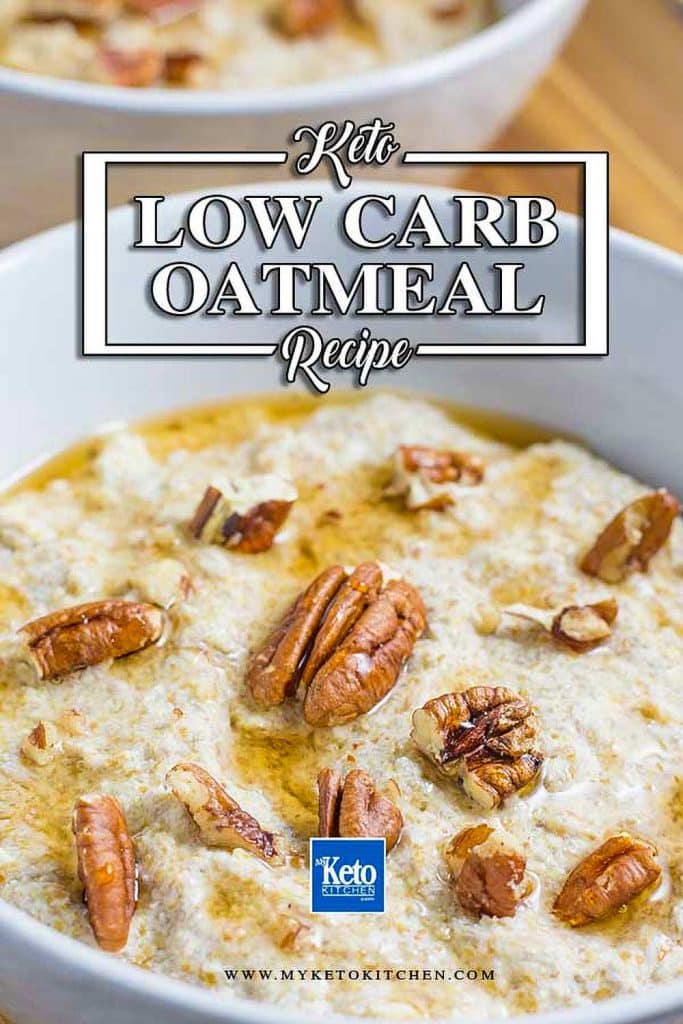
If you like our Low-Carb Porridge, try our other Keto Breakfast Recipes:
Adjust the servings above to make a larger batch of this Keto Porridge recipe.



Love it! A real morning treat!
Glad you like the porridge Andrew.
Completely delicious! I didn’t have almond milk so used water (and tripled it – it thickened immediately when I added the liquid). Otherwise, followed the recipe. I missed oatmeal and this works well instead. Thank you for the recipe!
Hello Mary, thank you so much for the feedback and thank you for sharing your method.