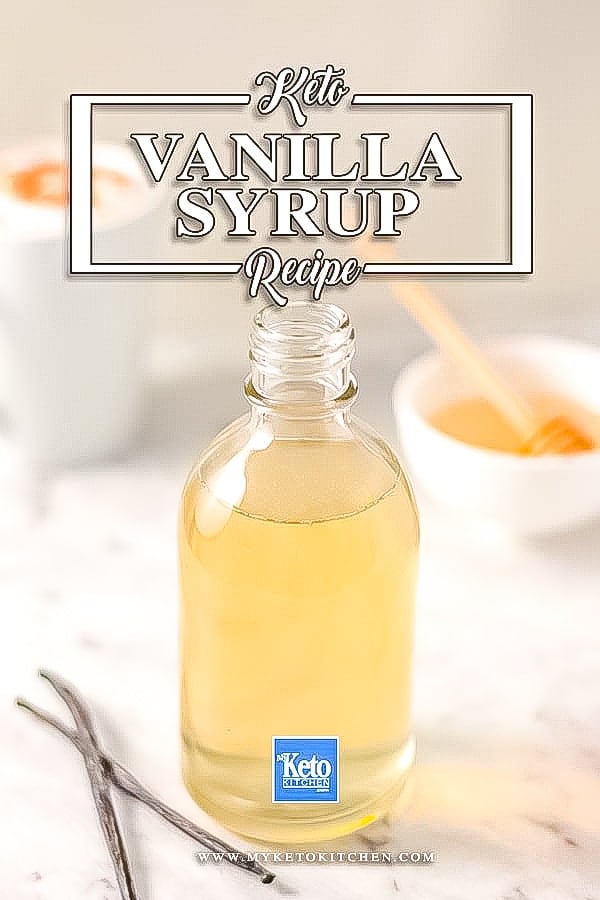
Sugar-free vanilla syrup is a simple syrup made with a zero-carb sweetener instead of sugar. A standard store-bought sugar-free syrup like Torani uses sucralose and acesulfame potassium — artificial sweeteners that leave a chemical aftertaste for many people. This version uses xylitol, which is a natural sugar alcohol that behaves like sugar in syrup form: it dissolves cleanly, stays pourable when cold, and doesn’t leave any aftertaste. Zero carbs per tablespoon serving.
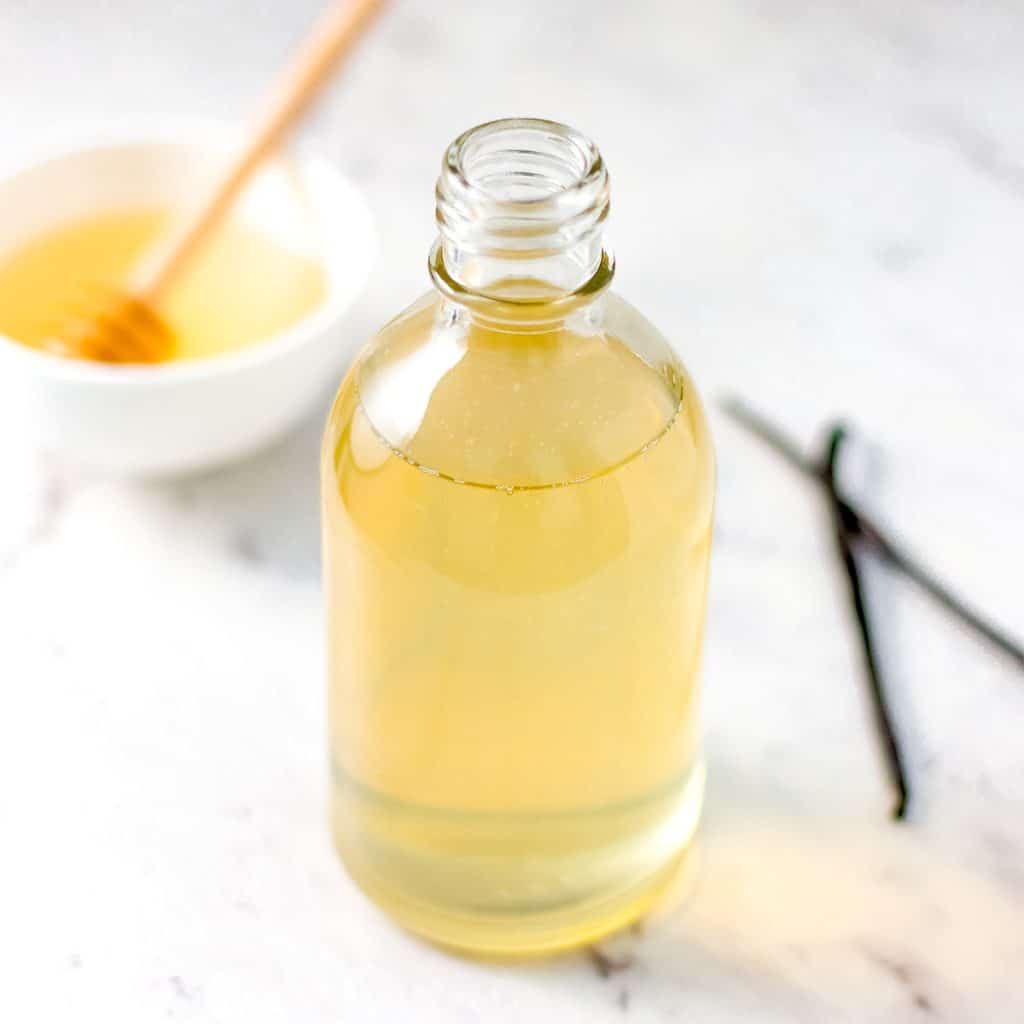
I keep a batch of this on the counter year-round — it’s one of the first things I remake when a jar runs out. I use it in my morning keto coffee regardless of where I’m cooking, whether that’s at home or on the road in the van. The reason I landed on xylitol rather than alternatives comes down to one thing: it makes a stable syrup that stays pourable at cool temperatures without recrystallizing in the bottle. If you’ve ever made a sugar-free syrup that turned grainy and solid in the fridge, that was erythritol. Xylitol doesn’t do that.
Below you’ll find a breakdown of which sweeteners work for syrup (and why others don’t), a comparison with store-bought options, how to use this syrup beyond coffee, and how to make other flavors with the same base recipe. The recipe card is further down — it hasn’t changed.
At a glance
What Is Sugar-Free Vanilla Syrup
Sugar-free vanilla syrup is a simple syrup — water and sweetener simmered together until slightly thickened — made without sugar and flavored with vanilla. It functions identically to regular vanilla syrup in coffee, drinks, and desserts, but contributes zero net carbs and near-zero calories per serving.
A thickener (xanthan gum in this recipe) is used to give the syrup its pourable, slightly viscous consistency. Without it, the syrup is thin and watery and tends to separate rather than blending cleanly into a drink. Commercial sugar-free syrups achieve this same consistency with xanthan gum as well — it’s standard across all major brands.
Note: xylitol is toxic to dogs. Keep this syrup out of reach of pets. Even small amounts can cause serious harm to dogs. If you have dogs in the household, allulose is a dog-safe sweetener that also works in this recipe — see the sweetener section below.
Homemade vs Store-Bought Sugar-Free Vanilla Syrup
The case for making your own comes down to ingredients. Store-bought sugar-free vanilla syrups — Torani is the most widely available — use artificial sweeteners and chemical preservatives. The homemade version uses three recognizable ingredients plus water.
| This Recipe | Torani SF Vanilla | |
|---|---|---|
| Sweetener | Xylitol (natural sugar alcohol) | Sucralose + Acesulfame Potassium |
| Vanilla source | Real vanilla essence | Natural flavors (undisclosed) |
| Preservatives | None | Sodium benzoate + Potassium sorbate |
| Net carbs (1 tbsp) | 0g | 0g |
| Aftertaste | None | Chemical sweetness noted in taste tests |
| Cost per batch (24 servings) | ~$1–2 | ~$8–12 per bottle |
| Safe for dogs | No — xylitol is toxic to dogs | Yes |
The only meaningful drawback of the homemade version is the dog safety note. Xylitol is toxic to dogs. If you have pets in the house, substitute allulose — see the sweetener guide below.
Which Sweetener to Use
The sweetener choice determines whether your syrup stays pourable when cold or turns into a grainy, crystallized mess in the bottle. Not all zero-carb sweeteners behave the same way in a liquid syrup.
| Sweetener | Works for syrup? | Crystallizes when cold? | Sweetness vs sugar | Safe for dogs? |
|---|---|---|---|---|
| Xylitol ✓ (this recipe) | Yes | No | 1:1 with sugar | No — toxic |
| Allulose ✓ (substitute) | Yes | No | ~70% of sugar | Yes — safe |
| Erythritol ✗ | No | Yes — solidifies | ~70% of sugar | Yes — safe |
| Monk fruit / Swerve ✗ | No | Yes — erythritol base | Varies by blend | Yes — safe |
| Stevia ✗ | Not recommended | No | ~200–300x sugar | Yes — safe |
Xylitol is used in this recipe because it dissolves like sugar, matches sugar sweetness 1:1, and stays pourable when refrigerated. It’s the most straightforward drop-in replacement for sugar in syrup form.
Allulose is the best dog-safe alternative. It behaves almost identically to xylitol in a syrup — dissolves well, won’t crystallize, clean flavor. Because allulose is approximately 70% as sweet as sugar (vs xylitol at 100%), use about 1 cup plus 3 tablespoons of allulose to replace 1 cup of xylitol if you want the same sweetness level.
Erythritol and erythritol-based blends (Swerve, Natvia, most monk fruit products) will crystallize when the syrup cools. The result is a grainy, solid mass in the bottle rather than a pourable syrup. Do not use these for this recipe.
Stevia has a distinct aftertaste that becomes pronounced in a simple syrup where there are no other flavors to mask it. Not recommended.
I also have a comprehensive guide to sugar free sweeteners here if you want to get more indepth.
How to Use Sugar-Free Vanilla Syrup
One to two tablespoons is the standard serving for most hot drinks. Scale up or down depending on the drink volume and how sweet you prefer it.
Coffee and espresso: add to hot or iced coffee, lattes, Americanos, cold brew, and flat whites. For iced drinks, add the syrup to the glass before the ice — it incorporates more easily into room-temperature liquid than cold.
Matcha and chai: one tablespoon in a matcha latte or chai cuts the bitterness without competing with the flavor. Vanilla pairs well with both.
Smoothies and shakes: a tablespoon adds vanilla sweetness without extra carbs or protein powder flavor interference.
Keto desserts: use as a drizzle over keto-friendly yogurt, whipped cream, or baked goods. Works as a soak for keto sponge cake to add moisture.
Homemade ice cream and frozen desserts: vanilla syrup mixed into the base adds flavor and the xylitol helps prevent it from freezing rock-solid (sugar alcohols lower the freezing point slightly).
Flavor Variations
This recipe is a direct base for any flavor variation — swap the vanilla essence for any other extract in the same quantity. The method and sweetener quantities stay identical.
Extracts that work well as substitutes: strawberry, raspberry, almond, hazelnut, peppermint, caramel, coconut, and cinnamon. Citrus extracts (lemon, orange) also work but may interact with the xylitol at higher heat — reduce to a 1-minute simmer.
The vanilla essence strength varies by brand. If your finished syrup has a weak vanilla flavor, add an extra half-teaspoon before bottling. Some extracts are considerably more concentrated than others — taste the syrup once cooled rather than straight from the pan.
Sugar-Free Vanilla Syrup Ingredients
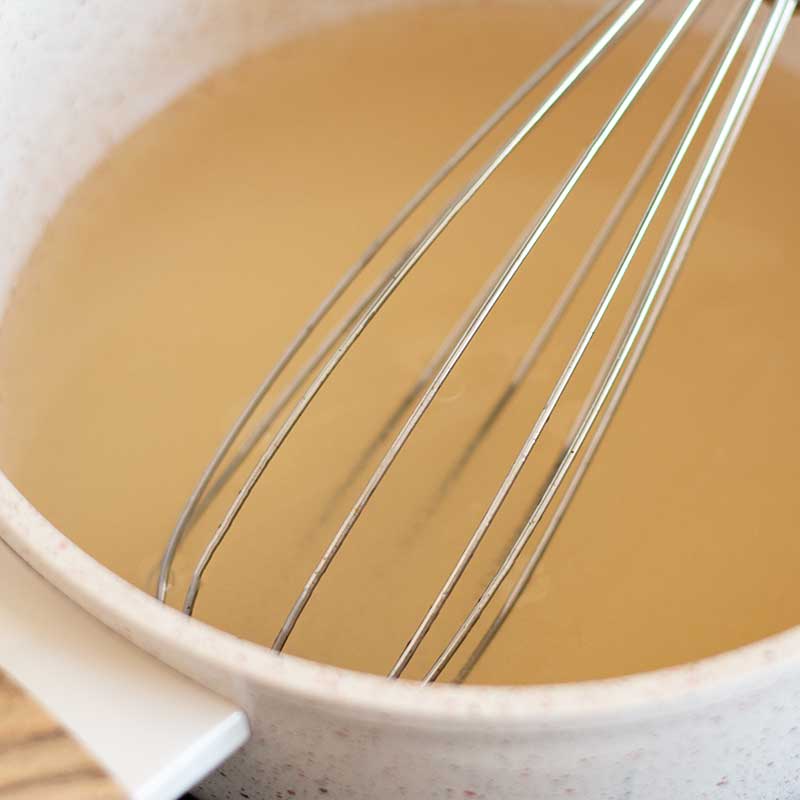
- ¾ cup of Xylitol
- 2 teaspoons of Vanilla Essence
- ⅛ teaspoon of Xanthan Gum
- 1 cup of Water
How to Make Sugar-Free Vanilla Syrup
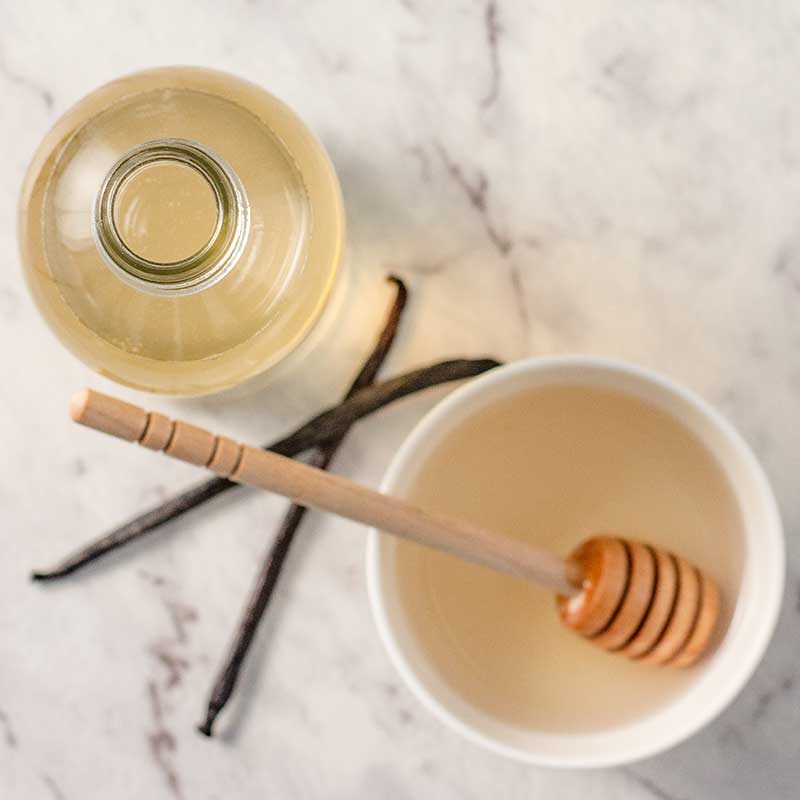
- Place the xylitol, vanilla essence, and xanthan gum into a small saucepan and whisk. Add the water.
- Bring to a boil and simmer for 2-3 minutes until it starts to thicken.
- Set aside to cool before storing in an airtight container
Sugar-Free Vanilla Syrup (1 Calorie & Zero Carbs)
Rate it
Print Pin Share EmailUnit Conversion
Ingredients
- ¾ cup Xylitol
- 2 teaspoons Vanilla Essence
- ⅛ teaspoon Xanthan Gum
- 1 cup Water
Instructions
- Place the xylitol, vanilla essence and xanthan gum into a small saucepan and whisk. Add the water.
- Bring to a boil and simmer for 2-3 minutes until it starts to thicken.
- Set aside to cool before storing in an airtight container
Nutrition

Pro Tips
Whisk the xanthan gum into the dry xylitol before adding water. Xanthan gum clumps badly if added to liquid. Mixing it into the dry sweetener first distributes it evenly before the water goes in, and you won’t get lumps in the finished syrup.
Add the vanilla off the heat. Heat drives off volatile aromatic compounds. Stir the vanilla essence into the syrup after you take it off the burner, not while it’s simmering. The flavor is noticeably more pronounced when you do this.
Keep it on the counter, not in the fridge, if you’re using it daily. Counter storage at room temperature is fine for up to 2 weeks — xylitol has natural antimicrobial properties similar to sugar. Refrigerated, it lasts up to a month. Both options are fine; counter storage just means it’s always pourable without warming.
Adjust sweetness at the end, not during cooking. The xylitol concentration increases as the water reduces during simmering. Taste the syrup once it’s cooled to room temperature rather than at cooking temperature — it will taste less sweet while hot.
Make a double batch. The recipe scales exactly — double everything to get 48 servings. The extra effort is minimal and you’ll have enough for a month without needing to make another batch.
Frequently Asked Questions
No. Erythritol-based sweeteners — including Swerve, Natvia, and most monk fruit blends — crystallize when the syrup cools. The result is a grainy, semi-solid bottle rather than a pourable syrup. This is a physical property of erythritol that can’t be overcome by adjusting quantities or technique.
Yes. Allulose is the best dog-safe alternative. It dissolves cleanly and won’t crystallize when cold. Because allulose is approximately 70% as sweet as sugar compared to xylitol at 100%, you’ll need about 1 cup plus 3 tablespoons of allulose to match the sweetness of 1 cup xylitol. The method and all other quantities stay the same.
Not recommended. Stevia has a distinct aftertaste that becomes prominent in a simple syrup where there are no other flavors to mask it. A small amount of liquid stevia can be added after the fact to boost sweetness in the finished syrup, but using stevia as the primary sweetener results in a noticeably different flavor.
Xanthan gum is a zero-carb thickening agent that gives the syrup its pourable, slightly viscous consistency. Without it, the syrup is very thin and watery and may separate rather than blending evenly into a drink. You can omit it if you prefer a thin coffee-syrup consistency — the flavor is identical — but the syrup won’t have the same texture as commercial products.
Stored in a sealed container on the counter, the syrup keeps for up to 2 weeks. Refrigerated in an airtight container, it lasts up to 1 month. The xylitol provides some natural preservation similar to high-sugar simple syrups. Signs of spoilage: visible mold, cloudiness, or an off smell. Discard if any of these appear.
Yes. One tablespoon serving contains 0g net carbs and 1 calorie. Xylitol has a low glycemic index of 7 (compared to sugar at 65) and has minimal impact on blood sugar or insulin at serving quantities. The syrup is keto-compatible at standard serving sizes of 1–2 tablespoons.
Start with 1 tablespoon and adjust to taste. Most coffee drinks use 1–2 tablespoons. For a large iced coffee (16 oz), 2 tablespoons is the standard equivalent of a coffee shop pump or two. Add less if you prefer a subtle vanilla flavor rather than pronounced sweetness.
Yes. Xylitol is toxic to dogs and can be fatal even in small amounts. It does not affect cats. Keep this syrup stored out of reach of dogs. If you have dogs in the household, substitute allulose — it is dog-safe and works identically in this recipe with a minor quantity adjustment (see the sweetener section above).
Yes. Swap the vanilla essence for any other flavoring extract in the same quantity — strawberry, hazelnut, almond, peppermint, caramel, and coconut all work well. The method, sweetener quantity, and xanthan gum amount stay identical. Taste once cooled, as extract intensity varies by brand, and adjust the flavoring up if needed.



Can i use stevia in place of xylitol?
Hi Kacey, stevia has a funny taste that won’t suit the recipe. Sorry.
Hi there, could psyllium be substituted for the xanthan gum?
Hi Joann, no, sorry, that won’t work, psyllium doesn’t dissolve like xanthan gum does. Sorry.
Is the vanilla flavor strong? And is it overly sweet?
Hello Bently, the vanilla syrup strength depends on the amount you use, it is quite sweet if you use a lot but if you just use a little it is not at all.
Nice recipe! I like mine a little sweeter too, so added 15 stevia drops.
Hi Crista,
Thank you so glad you like it.
Delicious! Makes my morning matcha latte so much yummier without the guilt, and I love knowing exactly what I am putting into my body, unlike with store bought syrups.
Though for those with a bit more of a sweet tooth like me, I personally recommend using 1 Cup of Xylitol instead of 3/4 Cup, as the sweetness is a bit more subtle in the recipe given than most syrups.
Though, it’s really just down to preference, nothing wrong with the recipe by any means!
Reccomending this recipe to all my friends! 🙂
Thank you for your kind words, James. I am also a fan of adding vanilla to my matcha latte, or almost any drink for that matter!
Why the xantham gum? What does it do?
Hi Ryan,
The xanthan gum is a thickener which makes the syrup less like water and more like syrup – without it, you’ll just have sweet water.
I never left a comment on a food blog before but I just made this and it was PERFECT. Such a nice flavor, perfect consistency, simpler recipe than others I’ve seen, just great all around. Thank you so much for this recipe and saving me from buying some $25 bottle of who knows what on Amazon. Xo
Thank you Tammy, your comment really made my day!
I’m so glad that you are enjoying the syrup 🙂
Can you change the Vanilla Essence to other flavors, like Lemon, for tea, peppermint for coffee, or others?? Thanks!!
Hi Brenna,
Of course you can! We also have a recipe for Pumpkin Spice Syrup if you are missing those lattes!
Can you substitute the xanthen gum for any different thickeners and achieve the same result?
Hi Erica,
I have not tried other thickeners so I can’t be of much help there. Guar gum should work well, but I would not recommend using gelatine. If you try something out, I’d love to know how it goes!
Hi,
What is the purpose of the xanthan gum? Is it used to thicken this into a consistency similar to honey? Or does it have a different purpose? I am interested in a syrup recipe for my coffee, so ide prefer a thinner syrup (something more like the consistency of water or store-bought coffee syrups). Do you think I could leave the xanthan gum out?
Thanks!!
Hi Elizabeth,
The xanthan gum thickens it to the consistency of store-bought syrups, without it, it will be just like water. If that’s what you prefer, you can leave it out.