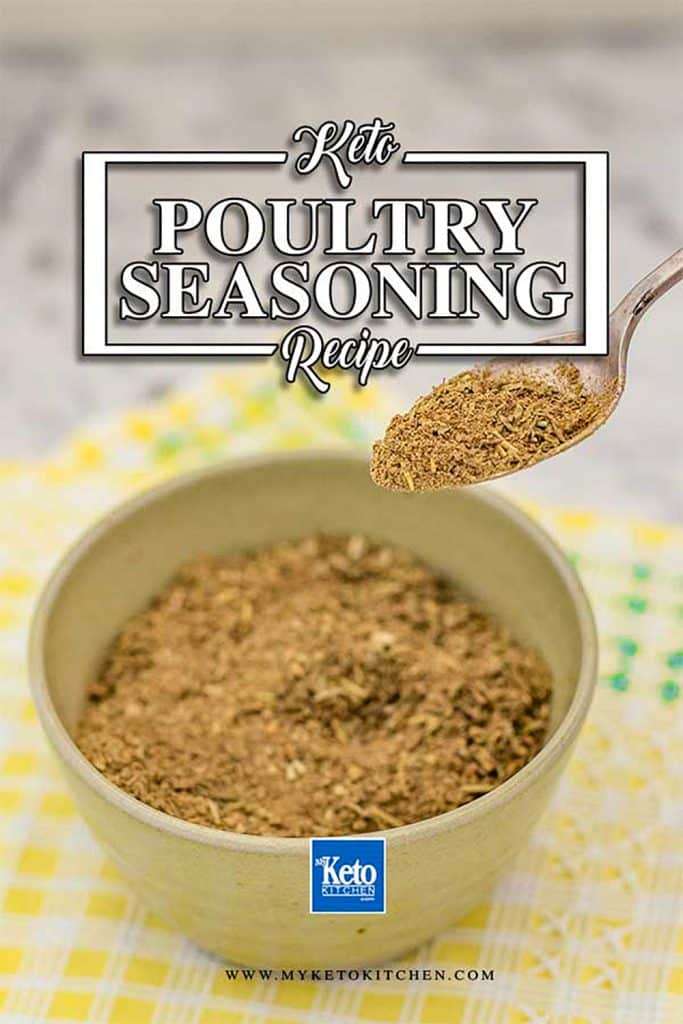
Poultry seasoning is a dried herb blend built around sage and thyme, used to season chicken, turkey, stuffing, and soups. The store-bought versions — McCormick being the most common — use the same base herbs, but contain varying amounts of filler ingredients depending on the brand, and have usually been sitting in a jar on a warehouse shelf for months before they reach your spice drawer. Making it at home takes five minutes and produces a noticeably more fragrant result, since the dried herbs haven’t had time to lose their volatile oils.
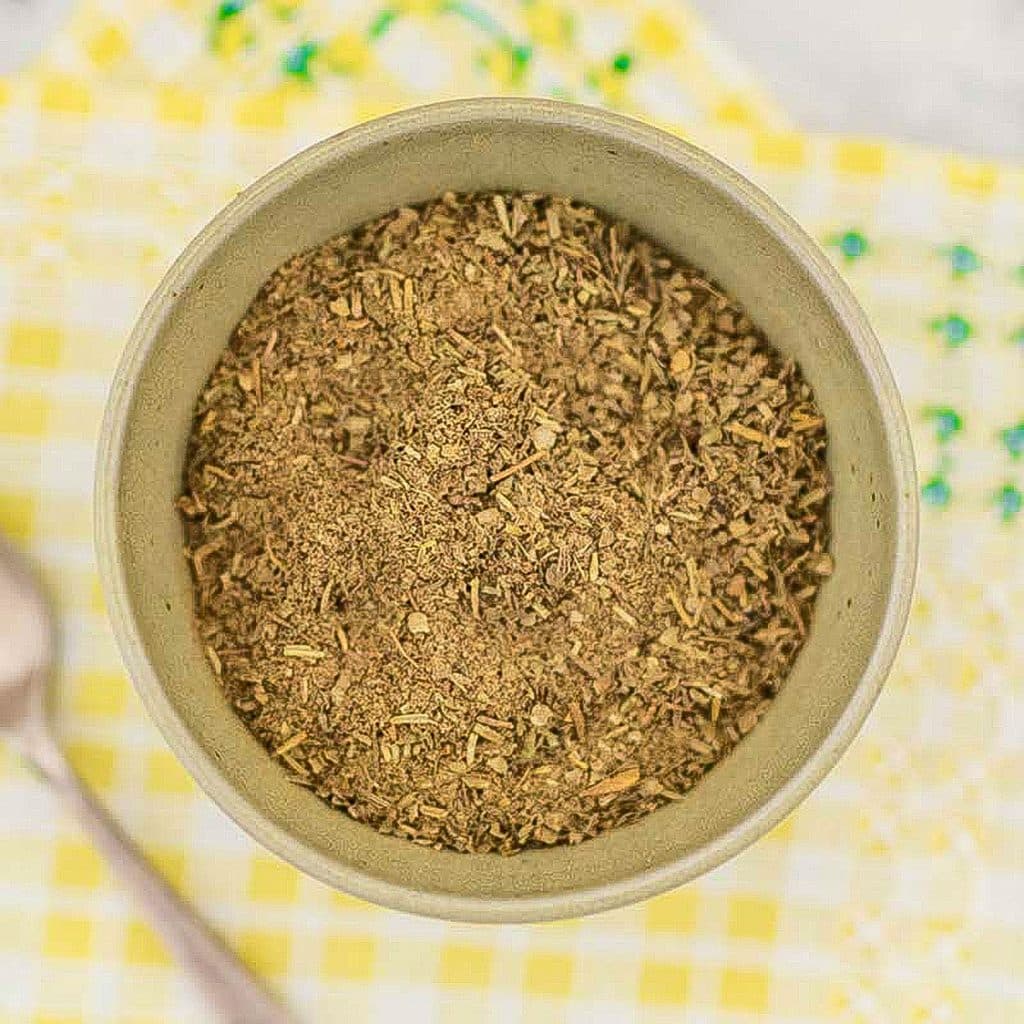
I keep a jar of this mixed and ready year-round. It goes on chicken thighs before they hit the grill, into keto soups and stews, and through any stuffing or casserole that needs a savory herb base. The sage is the dominant note and the one that makes or breaks the blend — it’s worth buying a fresh jar of ground sage specifically for this if yours has been open for more than a year, because old sage loses its potency quickly and the whole blend goes flat without it. The recipe below is the standard six-herb formula with no additives and no sugar.
Below you’ll find what each herb contributes to the blend, substitution options if you’re missing an ingredient, what to use this seasoning on beyond chicken, and a comparison with store-bought versions. The recipe card is further down — it hasn’t changed.
At a glance
What Is Poultry Seasoning
Poultry seasoning is a blend of dried herbs and spices — primarily sage, thyme, marjoram, and rosemary — that is used to season chicken, turkey, and the dishes built around them. It is not a standalone spice but a convenience blend that groups the herbs most commonly used in poultry cooking into a single jar.
The name refers to the application, not any particular standardized formula. Most versions share the same four core herbs with varying proportions, plus optional additions like nutmeg and pepper. This recipe follows the traditional six-ingredient formula: sage, thyme, marjoram, rosemary, nutmeg, and white pepper.
What Each Herb Contributes
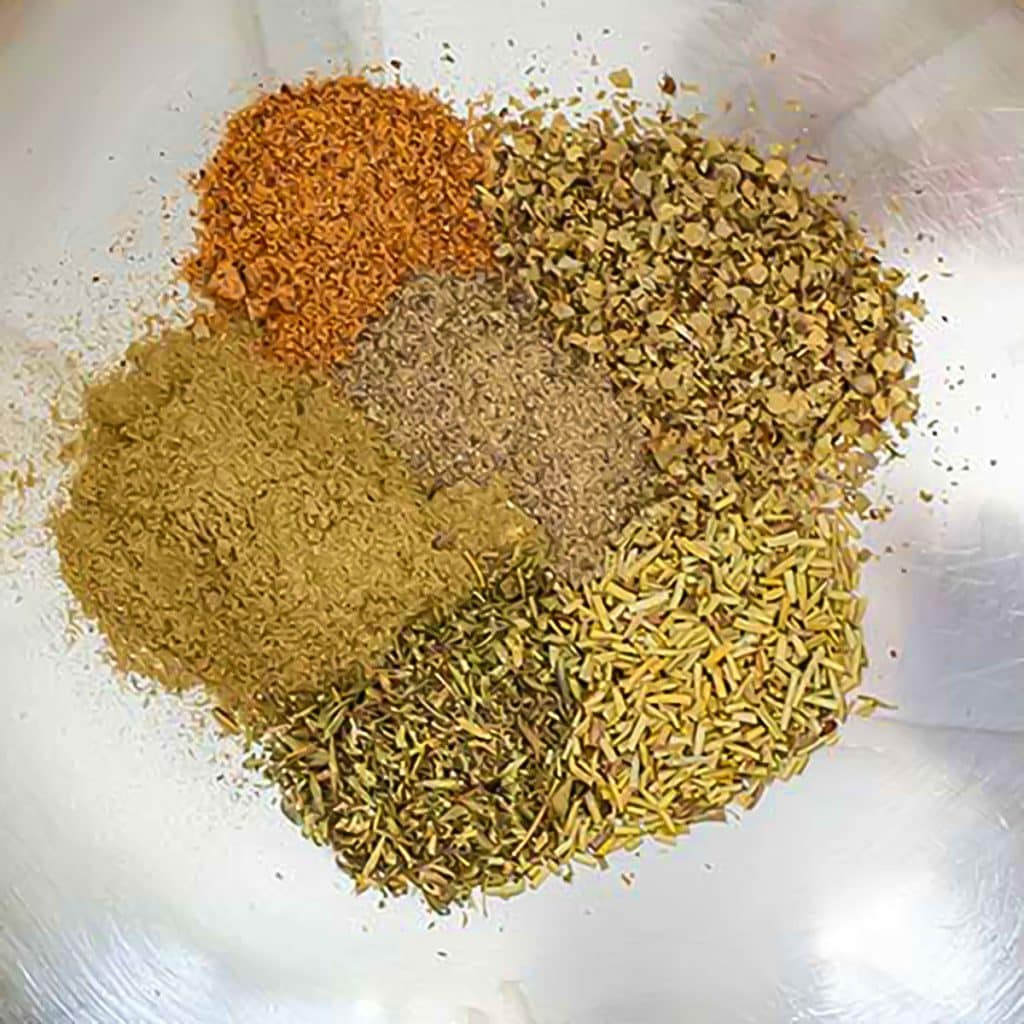
Ground sage is the dominant ingredient and the defining flavor of any poultry seasoning. It has an earthy, slightly peppery character with a faint camphor note that makes it instantly recognizable. Most traditional poultry seasoning blends use more sage than any other herb — this recipe uses double the quantity of thyme.
Dried thyme is the second-largest component and adds a subtler, slightly floral herby note that rounds out the sage. Together, sage and thyme make the recognizable base of the blend.
Dried marjoram is the least common herb in household spice drawers and the one most often substituted. It’s milder and sweeter than its close relative oregano, and it adds complexity without sharpness.
Dried rosemary contributes a woody, pine-like character. It works well in small quantities as a background note but can dominate if the proportion is increased.
Ground nutmeg adds a subtle warmth and faint sweetness without any actual sweetness. It’s the element that makes poultry seasoning smell more complex than a simple herb mix.
White pepper adds mild heat and a slightly floral spice note. Black pepper is interchangeable here with minimal difference in flavor.
Poultry Seasoning Substitutes
If you’re missing one of the six herbs, the blend still works with adjustments. The sage and thyme are non-negotiable — the remaining four can be approximated.
| Missing herb | Best substitute | Quantity adjustment |
|---|---|---|
| Marjoram | Dried oregano | Use half the quantity — oregano is more pungent |
| Rosemary | Extra thyme | Equal quantity — adds herby depth without the pine note |
| Nutmeg | Omit, or a pinch of allspice | Very small amount if using allspice — it’s stronger |
| White pepper | Black pepper | Equal quantity — minimal flavor difference |
| Whole dried herbs (not ground) | Grind first in a spice grinder or mortar and pestle | Coarse herbs create an uneven blend — grind to a fine powder before mixing |
If you need a quick substitute for the entire blend, dried sage alone is the most effective single-herb substitute. Equal quantities of dried sage and dried thyme combined also work well. Herbs de Provence is the closest pre-mixed alternative — use it 1:1 in any recipe calling for poultry seasoning.
What to Use Poultry Seasoning On
Poultry seasoning is named for chicken and turkey but functions as a general savory herb blend that works across a wide range of applications.
Chicken and turkey: Rub directly onto skin or meat before roasting, grilling, or pan-frying. Use approximately 1 teaspoon per pound of meat as a starting point. Works on whole birds, bone-in pieces, and boneless cuts.
Stuffing and keto stuffing: The original purpose of the blend — it was developed specifically to season bread-based stuffing. Works equally well in low-carb stuffing made with cauliflower or almond flour-based bread.
Soups and stews: Add 1 teaspoon per 4 cups of broth in chicken soups, bone broth, or vegetable-based stews. It integrates into a liquid base and distributes evenly.
Casseroles and baked dishes: Works anywhere you’d normally use individual herbs — chicken and broccoli casserole, pot pie fillings, or baked chicken thigh dishes.
Vegetables and pork: Particularly good on roasted cauliflower, squash, and root vegetables. Despite the name, the herb profile complements pork well — use it as a dry rub on pork tenderloin or shoulder.
Eggs and frittatas: A pinch in scrambled eggs, frittata or an egg-based bake adds savory herb depth without requiring multiple individual herbs.
Homemade vs Store-Bought
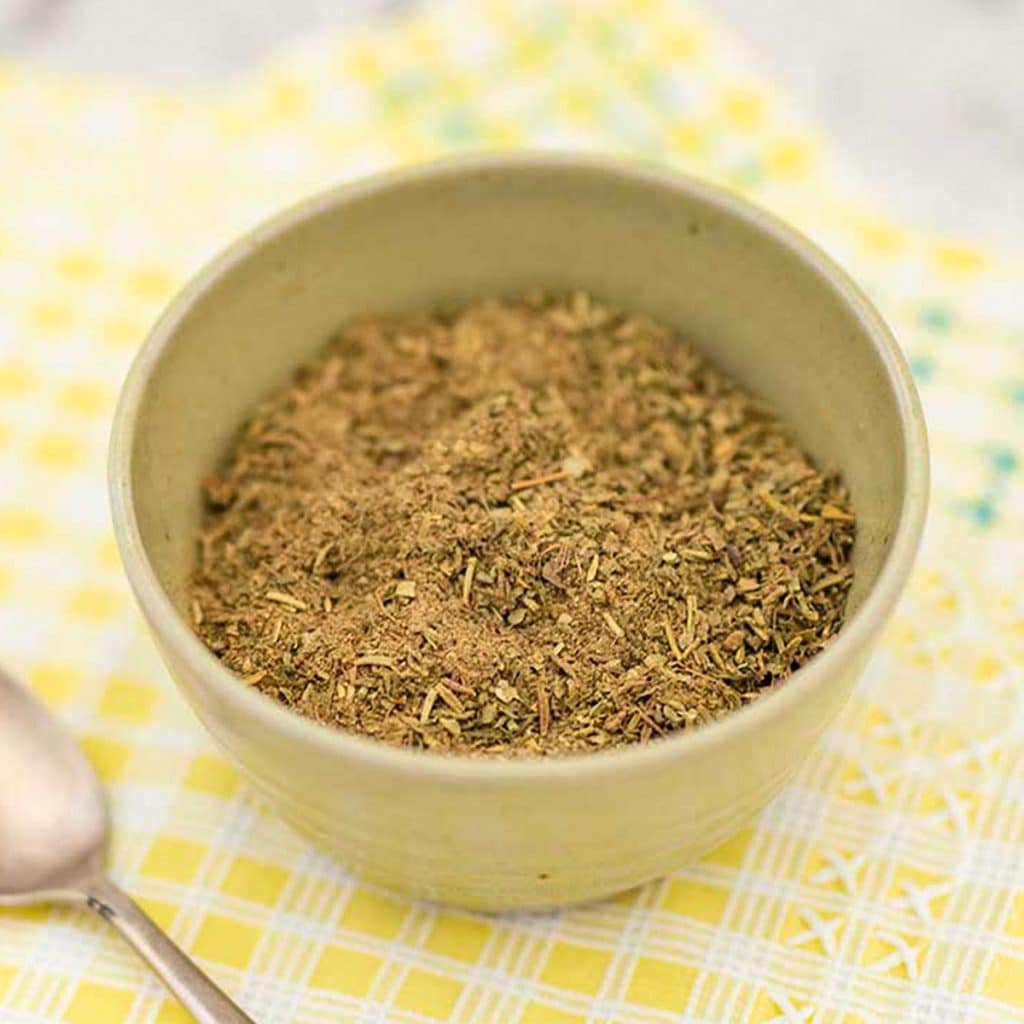
McCormick poultry seasoning contains thyme, sage, marjoram, rosemary, black pepper, and nutmeg — the same herbs as this recipe in comparable proportions. It contains no sugar, no salt, and no artificial additives. For most purposes, it is a clean product.
The case for homemade is freshness, not ingredients. Pre-ground dried herbs in sealed commercial packaging start losing their volatile oils from the moment the jar is opened. A jar on a grocery store shelf may have been packaged six to twelve months before purchase. Herbs ground and mixed at home from recently opened individual spice jars are noticeably more fragrant, particularly the sage.
| Homemade (this recipe) | McCormick Store-Bought | |
|---|---|---|
| Sugar | None | None |
| Preservatives | None | None |
| Shelf life | 6 months (opened jar) | 2–3 years sealed, 1 year opened |
| Freshness on purchase | Made to order | Variable — months pre-packaged |
| Customizable | Yes | No |
| Cost per batch | Pennies | ~$3–5 per jar |
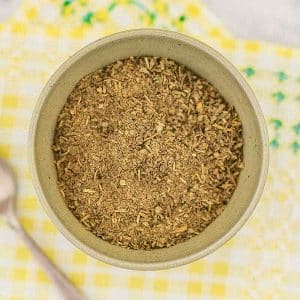
Homemade Poultry Seasoning
Rate it
Print Pin Share EmailUnit Conversion
Ingredients
- 2 tsp Ground Sage
- 2 tsp Dried Thyme
- 1 tsp Dried Marjoram
- .5 tsp Ground Nutmeg
- .5 tsp White Pepper
Instructions
- Place all ingredients into a small bowl.
- Mix well.
- Store in an airtight jar.
Nutrition

Pro Tips
Use fresh jars of individual herbs, not old ones. The whole point of making this at home is fragrance. If your sage jar has been open for over a year, it’s likely flat. Buy a new jar — the difference in the finished blend is immediately noticeable.
Double or triple the batch. Seven teaspoons is a small quantity. Most recipes use 1 to 2 teaspoons, so a single batch gives three to seven uses. Making a double batch fills a standard spice jar and saves you mixing again for months.
Grind coarse herbs before mixing. If your rosemary or thyme is in whole leaf form rather than finely ground, run it through a spice grinder or mortar and pestle first. Coarse herbs create an uneven blend and an unpleasant texture when rubbed directly onto meat.
Start with less and adjust. The blend is sage-forward, which not everyone loves at full strength. Start with half the recommended quantity on a new dish and adjust to taste.
Store in glass, not plastic. Volatile oils from dried herbs absorb into plastic and dissipate faster. A sealed glass jar in a cool, dark pantry preserves fragrance significantly longer.
Frequently Asked Questions
Poultry seasoning is a dried herb blend primarily made from sage, thyme, marjoram, and rosemary — sometimes with nutmeg and pepper — used to season chicken, turkey, stuffing, and soups. It’s a convenience blend that groups the most common poultry herbs into one jar. The name refers to its application, not any standardized formula, so specific ratios vary by brand and recipe.
Dried oregano is the best substitute for marjoram. Use half the quantity called for, since oregano is more pungent and can overpower the blend at equal measure. For 1 teaspoon of marjoram, use ½ teaspoon of dried oregano.
Dried sage alone is the most effective single-herb substitute for poultry seasoning. Equal parts dried sage and dried thyme combined is the next best option. Herbs de Provence is the closest pre-mixed substitute — use it at the same quantity the recipe calls for. Italian seasoning also works in a pinch, though it has a different character due to basil and oregano.
Yes. This recipe contains only dried herbs and spices — all naturally gluten-free. Most commercial brands including McCormick are also gluten-free, but check labels on less common brands as some spice blends are processed in facilities that also handle gluten-containing ingredients.
Stored in a sealed glass jar in a cool, dark pantry or spice drawer, homemade poultry seasoning keeps well for up to 6 months. After that it remains safe to use but begins to lose fragrance and potency. The sage fades fastest. A simple test: open the jar and smell it. If it smells flat, the blend has lost its potency and is worth refreshing.
A general starting point is 1 teaspoon per pound of meat for a dry rub, or 1 teaspoon per 4 cups of liquid in soups and stews. For stuffing, most recipes call for 1 to 2 teaspoons per batch. Adjust to taste based on how sage-forward you want the dish.
Yes on pork — the herb profile complements pork particularly well, especially the rosemary and sage, making it a natural fit for pork tenderloin, shoulder, or chops. Not recommended for most fish — sage and rosemary are too robust and will overpower mild fish flavors. Chicken, turkey, pork, and vegetables are the best applications.
This recipe does not contain salt. Most major commercial brands including McCormick also do not add salt, which allows you to control seasoning separately. Some smaller brands or pre-mixed chicken seasonings do include salt — check the ingredient label if you’re managing sodium intake.